
Why Stump Grinding Is a Must After Tree Removal
When a tree comes down, removing the stump isn't just tidying up — it's finishing the job properly. Leaving a stump behind can cause problems that cost far more in time, safety or money than grinding it out upfront, especially in the subtropical conditions across the Gold Coast and Northern Rivers.
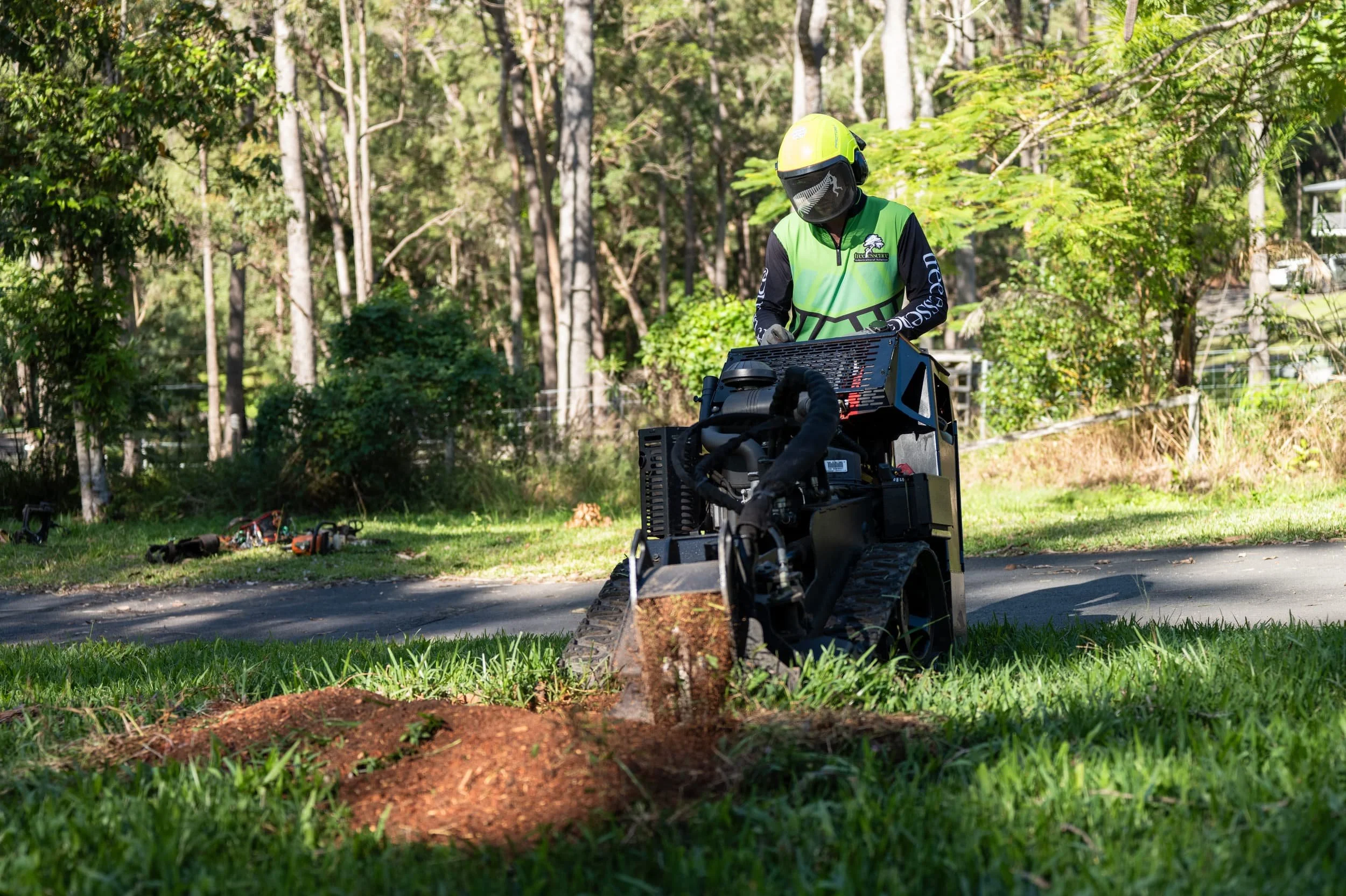
What stump grinding is
Grinding mechanically breaks the stump down below ground level, removing the bulk of its mass and clearing the way for a clean, usable yard. In our humid climate, with frequent rainfall and sandy coastal soils, untreated stumps quickly become hubs for decay, pests and regrowth that can threaten nearby structures, lawns and underground services.
Why it matters:
Prevents regrowth. Species common to the region — various palms, figs and brush box — can sprout from a leftover stump. Grinding stops it.
Reduces pest and disease risk. Stumps hold moisture and wood that attract termites, ants and fungi. In humid conditions this is a real hazard to nearby trees and your home.
Improves safety and appearance. Stumps are trip hazards and get in the way of mowing, planting and redevelopment. Grinding flush makes a yard safer and tidier.
Frees up usable space. Ground out, the area can become garden, patio, lawn or a play zone — and a clean finish adds appeal for buyers or renters.
Limits root problems. Grinding disrupts residual roots that can otherwise spread into paving, retaining walls, pipes or foundations.
Speeds up restoration. We can fill, level and prepare the area for turf or planting, restoring your outdoor space quickly.
A few pro tips: the right grinder depends on your terrain — coastal sand and hinterland slopes need different gear; softer ground after rain grinds more easily, while dry conditions reduce machine slip; and some councils have rules on stump removal, wood-chip disposal or works near bushland and dune systems, so it's worth checking first.
Don't let a stump become a problem. Get in touch and we'll clear the space properly. Learn more about our stump grinding service.
FAQ
How deep does grinding go?
Usually around 100–300 mm below ground, depending on stump size and what you plan to do with the area.
Can I plant where the stump was?
Yes — once the site is filled, levelled and root material cleared, provided the soil is suitable and drains well.
Will grinding damage nearby plants or paths?
We take care to protect the surrounding area, using barriers, the right machine and controlled chip management.