
Beechmont
[ CASE STUDY ]At a glance
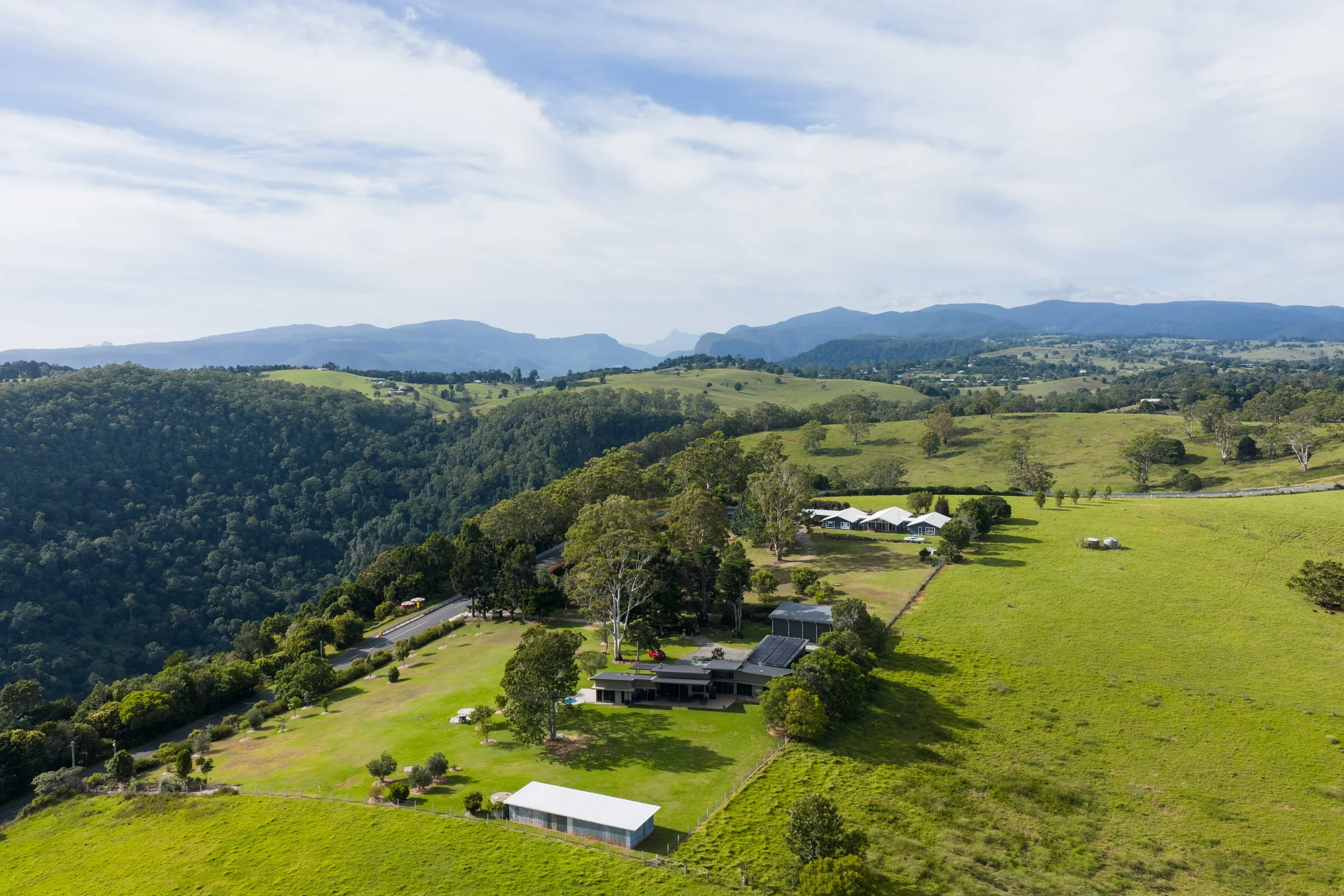
Beechmont, Scenic Rim, QLD
Location
Long-term client, ongoing annual inspection and maintenance
Relationship
Annual canopy management, structural pruning, bracing, storm recovery
Scope
All-terrain access, exposed ridgeline, dynamic load and co-dominant stem management
Technicality
Long-term property resilience and structural integrity
Focus
Jamie Montgomery, AQF Level 5
Prepared by
[ OVERVIEW ]Storm recovery and long-term canopy resilience on an exposed ridgeline
The property, and the relationship
The Beechmont property is a rural residential estate on an elevated ridgeline in the Scenic Rim, south-west of the Gold Coast. Mature and semi-mature trees cover a sloping landscape with serious wind exposure. Those conditions put sustained mechanical stress on tree structure and amplify the consequences of every storm season.
We've managed the canopy here over multiple seasons, building an intimate knowledge of individual specimens, their structural history, and how they respond to the site. What began as a one-off assessment has become a long-term maintenance partnership built on proactive risk management and genuine stewardship of the trees.
The engagement
Annual scheduled inspection and maintenance, supplemented by responsive attendance after storms. The owner relies on Tree Essence as their sole arboricultural provider for every tree health, structural, and safety matter on the property.
[ THE CONDITIONS ]What the site demands
Managing trees here means understanding the stresses the site imposes:
An elevated ridgeline with high, sustained wind exposure, particularly through summer storm season
Even moderate gusts dislodge dead or weakened laterals, especially in the lower and mid-crown
Drought or root competition makes shedding faster and less predictable
A tree on the fence line has part of its crown over the neighbour by definition, so shedding in that zone lands next door
Together these call for a higher standard of practice than a flat urban block. Assessment has to account for dynamic wind loading, the way defects progress in exposed trees, and the practical limits of getting equipment across steep ground.
[ THE WORK ]The annual programme
Each year we walk the full property and run a coordinated programme of works, addressing what the current inspection turns up, and continuing to manage the trees of concern we're already watching.
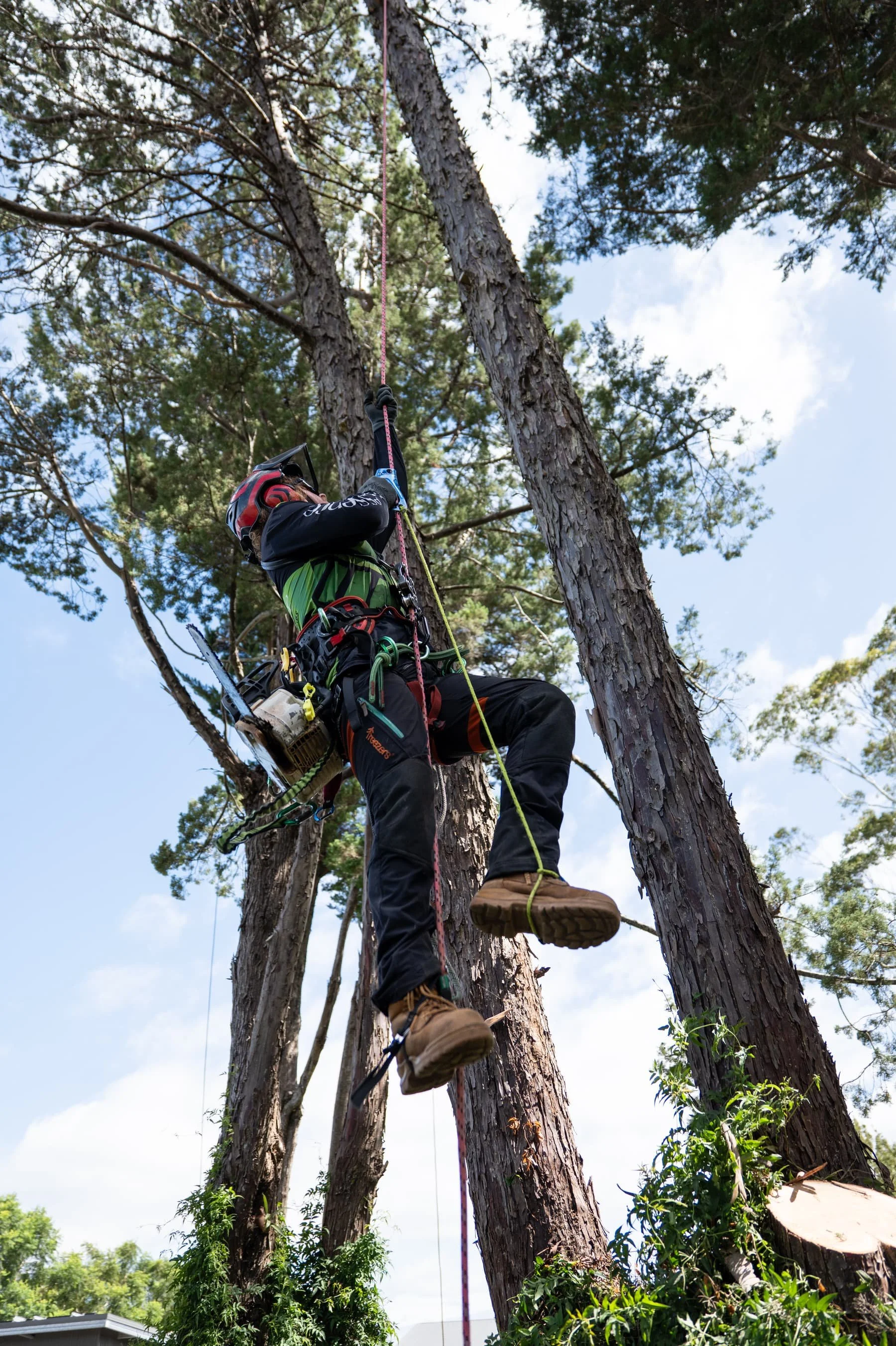
A qualified AQF Level 5 consulting arborist conducts a systematic Visual Tree Assessment of every significant specimen, looking at structural integrity (branch unions, co-dominant stems, included bark, cracks), crown condition (deadwood, density, over-extended laterals, dieback), root zone and anchorage, wind-risk factors, and the status of any installed bracing or cabling.
Recurring works
Purpose and method
Systematic removal of dead, dying, and hanging branches. On an exposed site, deadwood becomes a projectile in wind and accelerates decay at attachment points.
Deadwood removal
Selective reduction of laterals that have outgrown the structural capacity of their attachment. Cuts dynamic load and failure risk under wind without compromising crown form.
Lateral reduction
Crown volume reduction on selected trees to reduce wind sail and mechanical stress on stem and roots. Carried out to AS 4373, keeping balanced crown architecture.
Canopy reduction
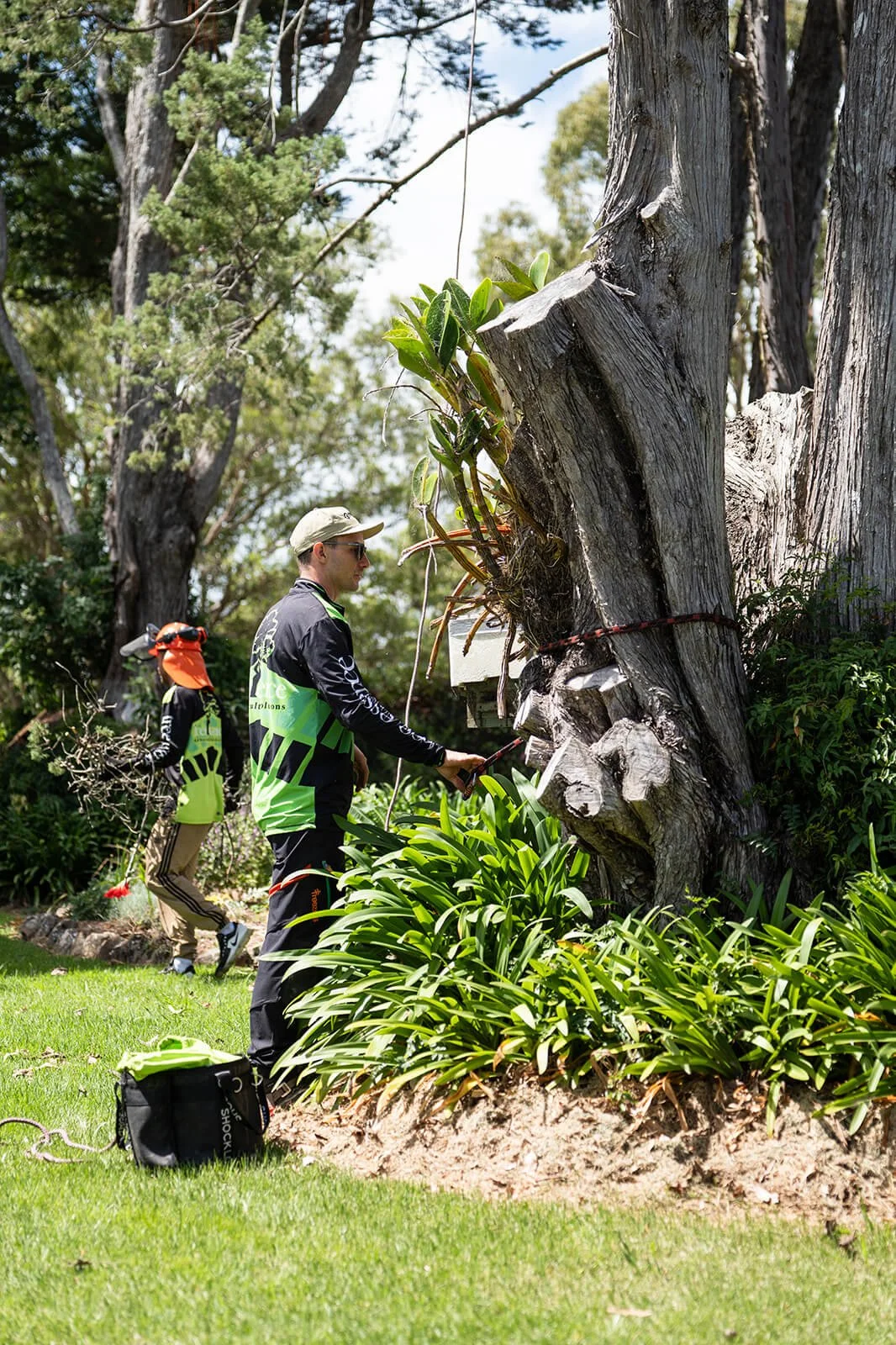
Dynamic or static cabling at identified co-dominant unions and weak forks for supplementary support. Inspected and load-tested on every annual visit.
Bracing & cabling
Selective thinning, crown lifting, and removal of crossing branches to improve light, air movement, and overall canopy health.
Canopy health pruning
Post-event attendance to assess and address damage, remove failed limbs, and make safe any tree presenting immediate risk.
Storm remediation
[ IN FOCUS ]A decade of structural management — the Cypress
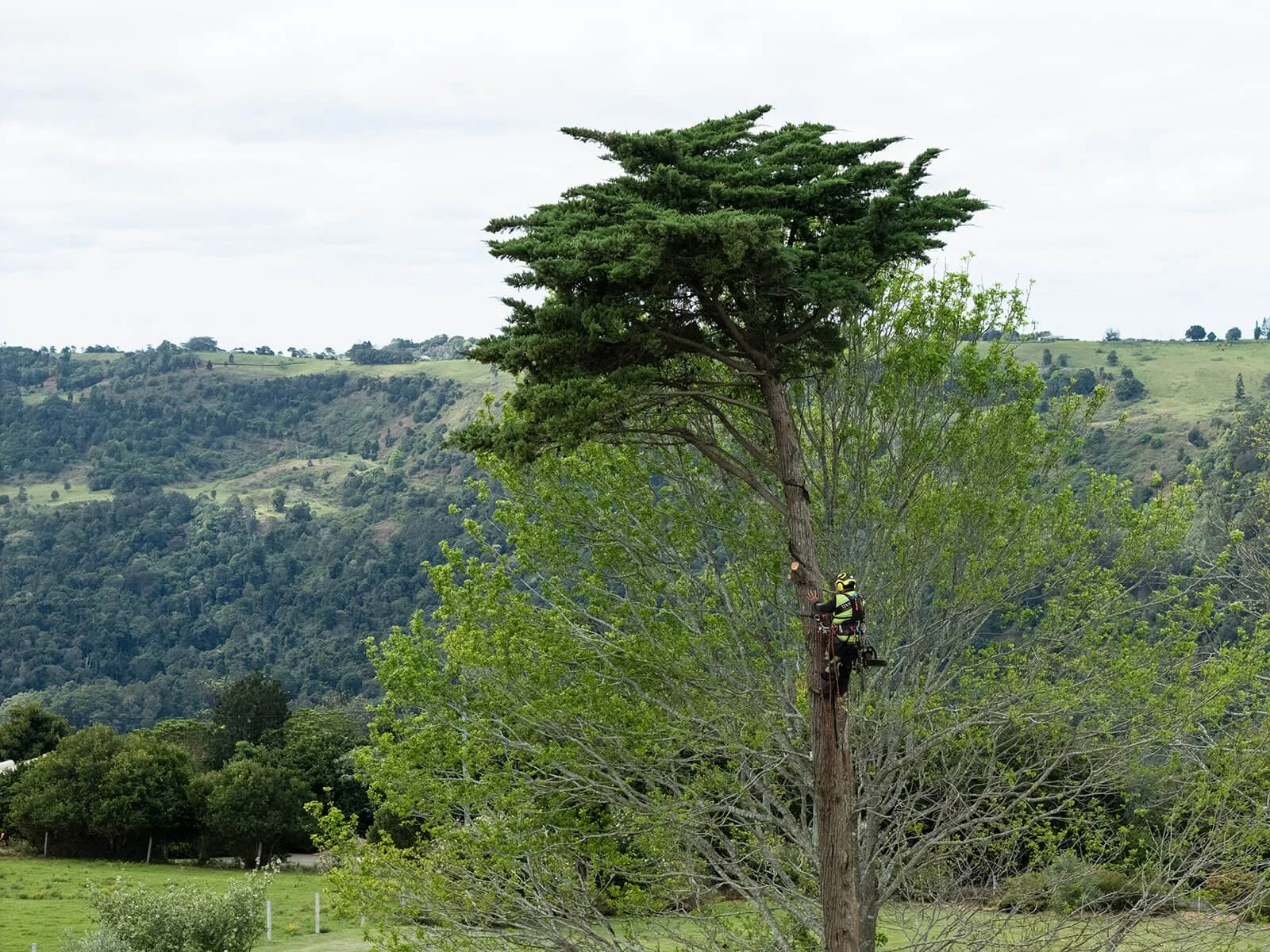
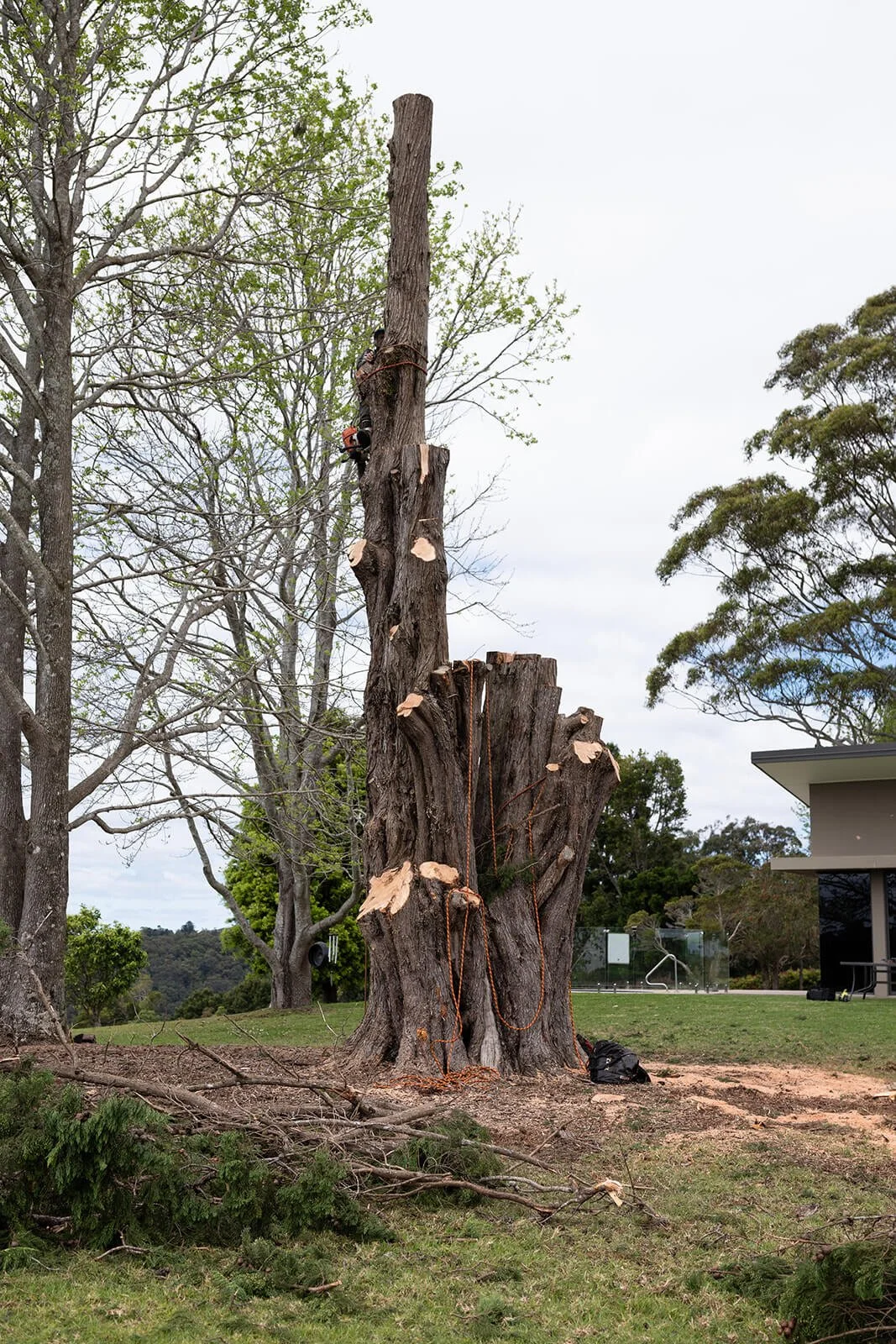
A large, mature cypress was one of the most technically significant trees on the property. We managed it over many years, and ultimately removed it when it became clear the cabling system was the only thing holding it together.
The tree presented with a large co-dominant union: two main stems of near-equal diameter from a common point, forming a structurally weak attachment with included bark. In exposed, wind-loaded positions, unions like this are among the most common sites of catastrophic failure. The included bark prevents the collar tissue that would otherwise give the junction strength.
Rather than recommend immediate removal, we assessed the tree as manageable. The owner valued it, and it hadn't shown acute instability. We installed a structural cabling system across the union to redistribute dynamic wind load away from the compromised junction and reduce the risk of the stems separating in a storm.
From there, the cable and the tree's condition were checked on every annual visit. Over time we logged a series of changes that incrementally raised the risk.
A crack developing at the union, visible on close inspection
Increased cable tension at load checks, showing the system was actively engaging under the tree's own weight
Movement at the crack face during wind gusts, confirming partial stem separation
The point at which the stems had effectively failed at the union, and the cable was no longer supplementary support but the primary load path holding them together
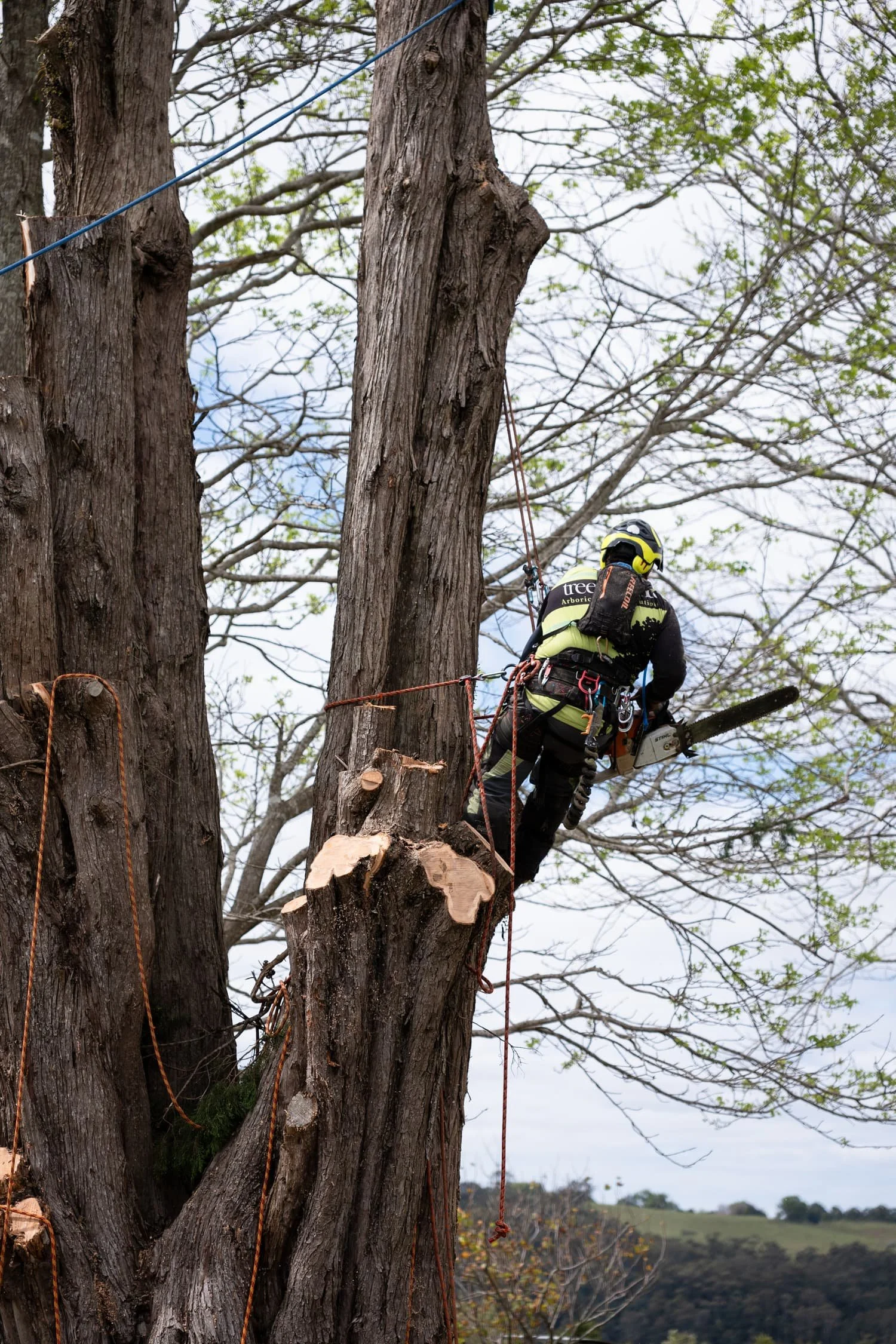
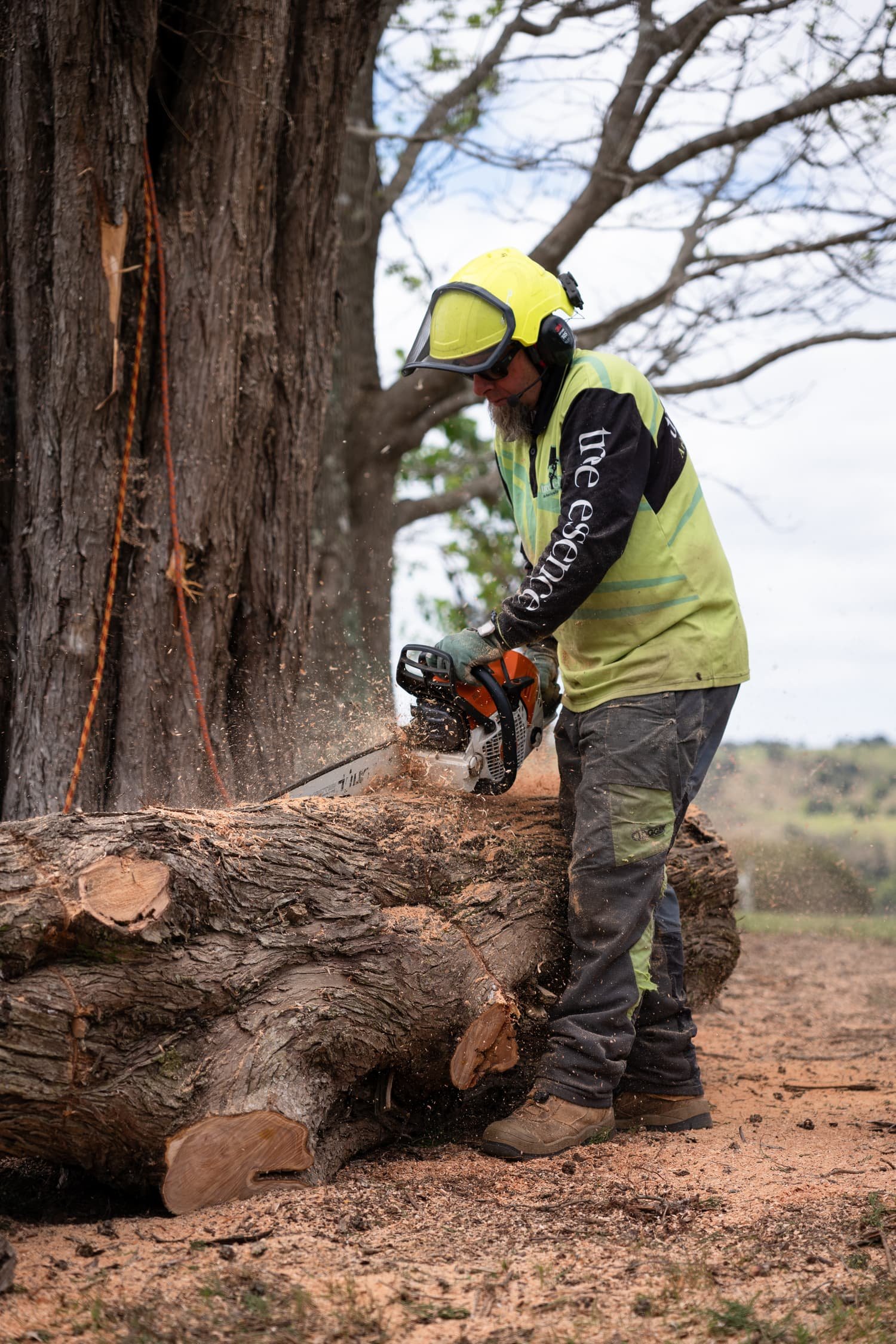
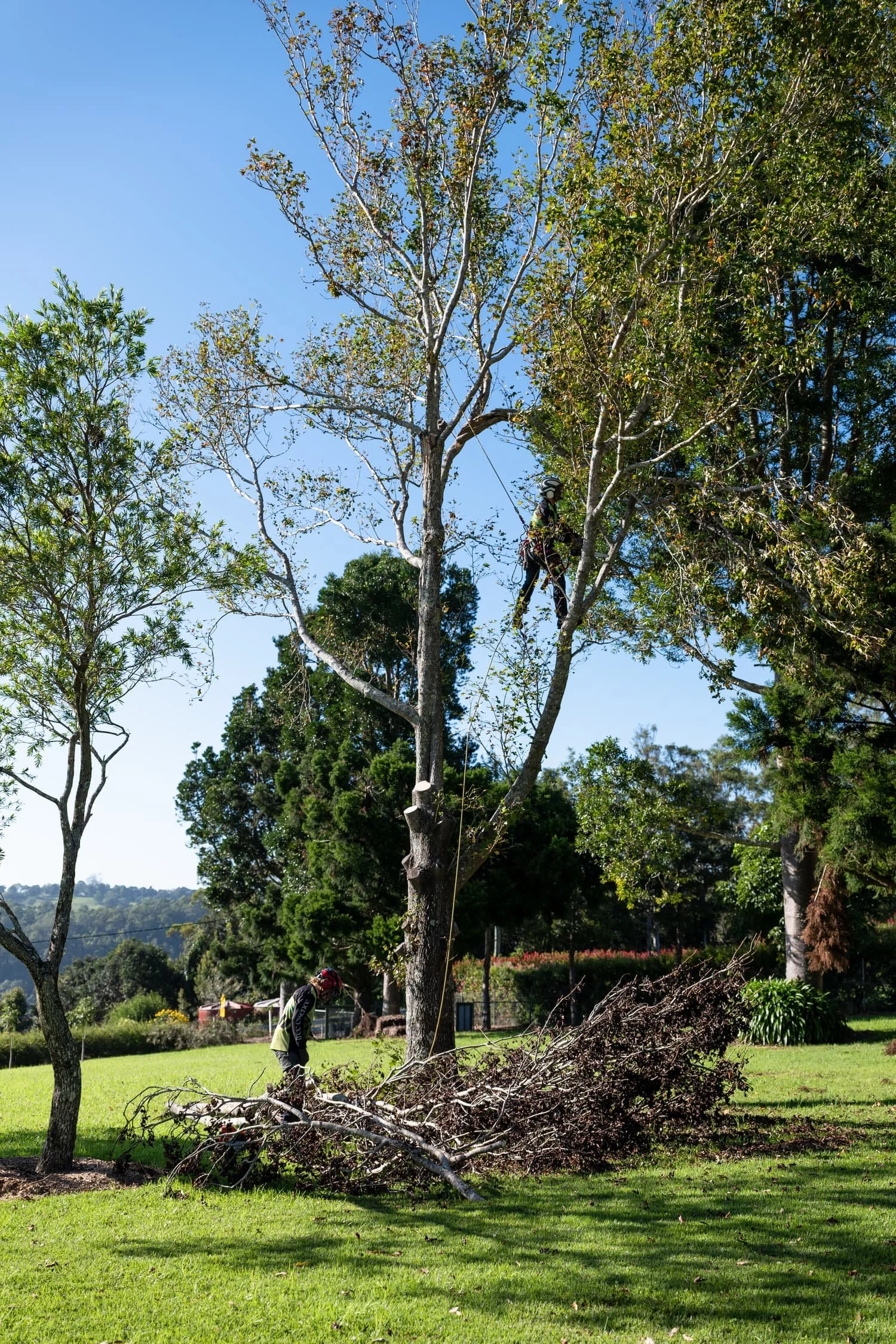
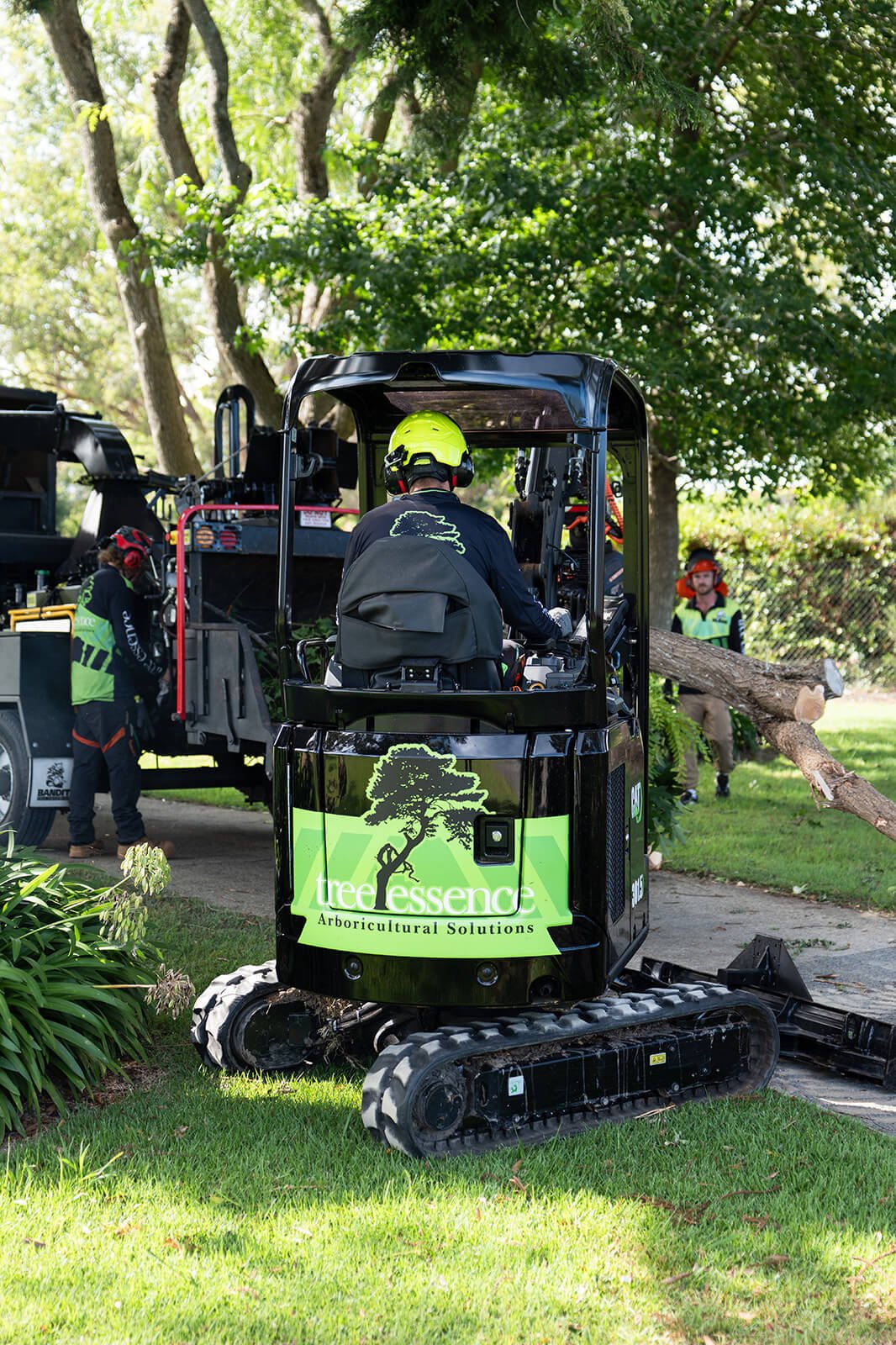
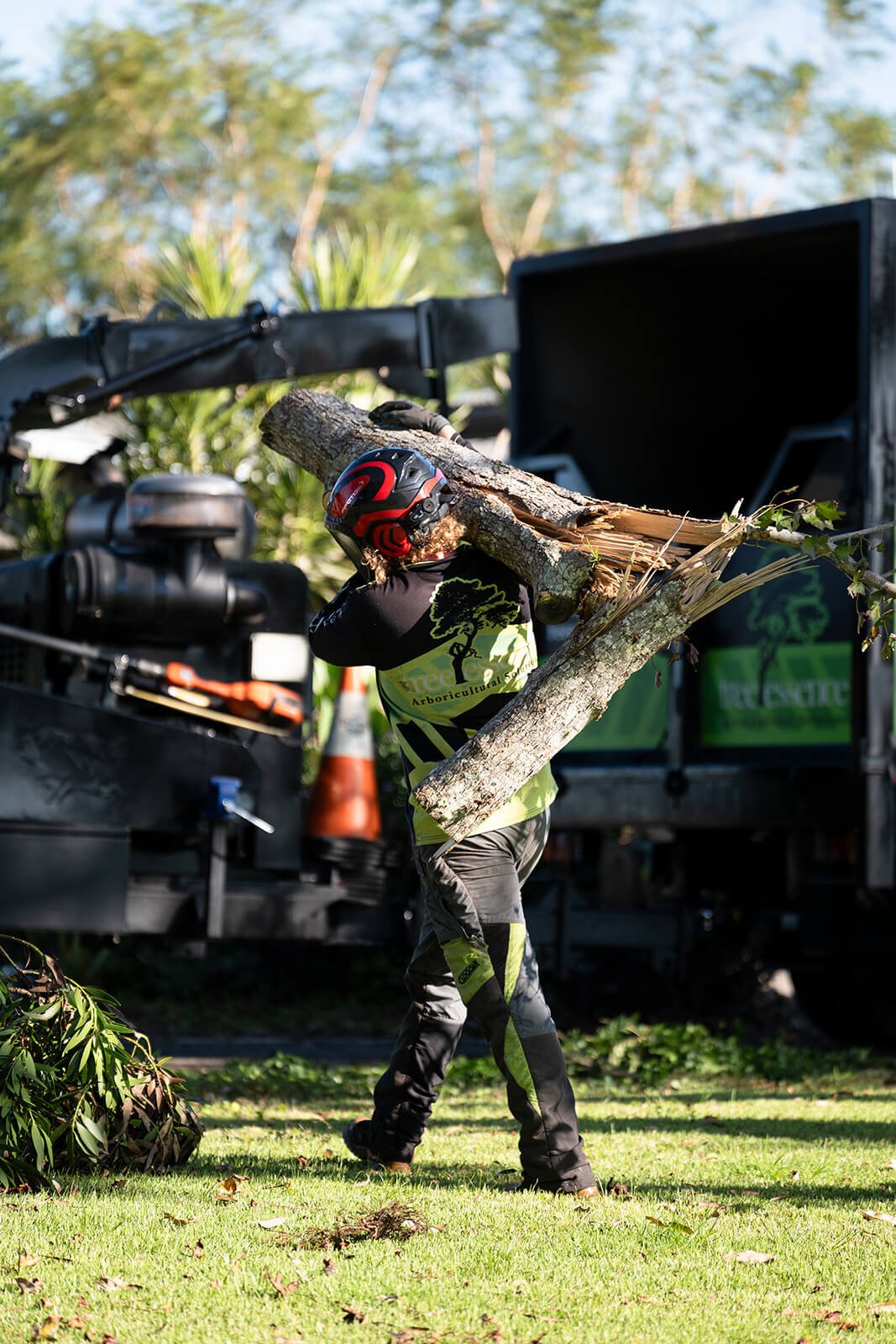
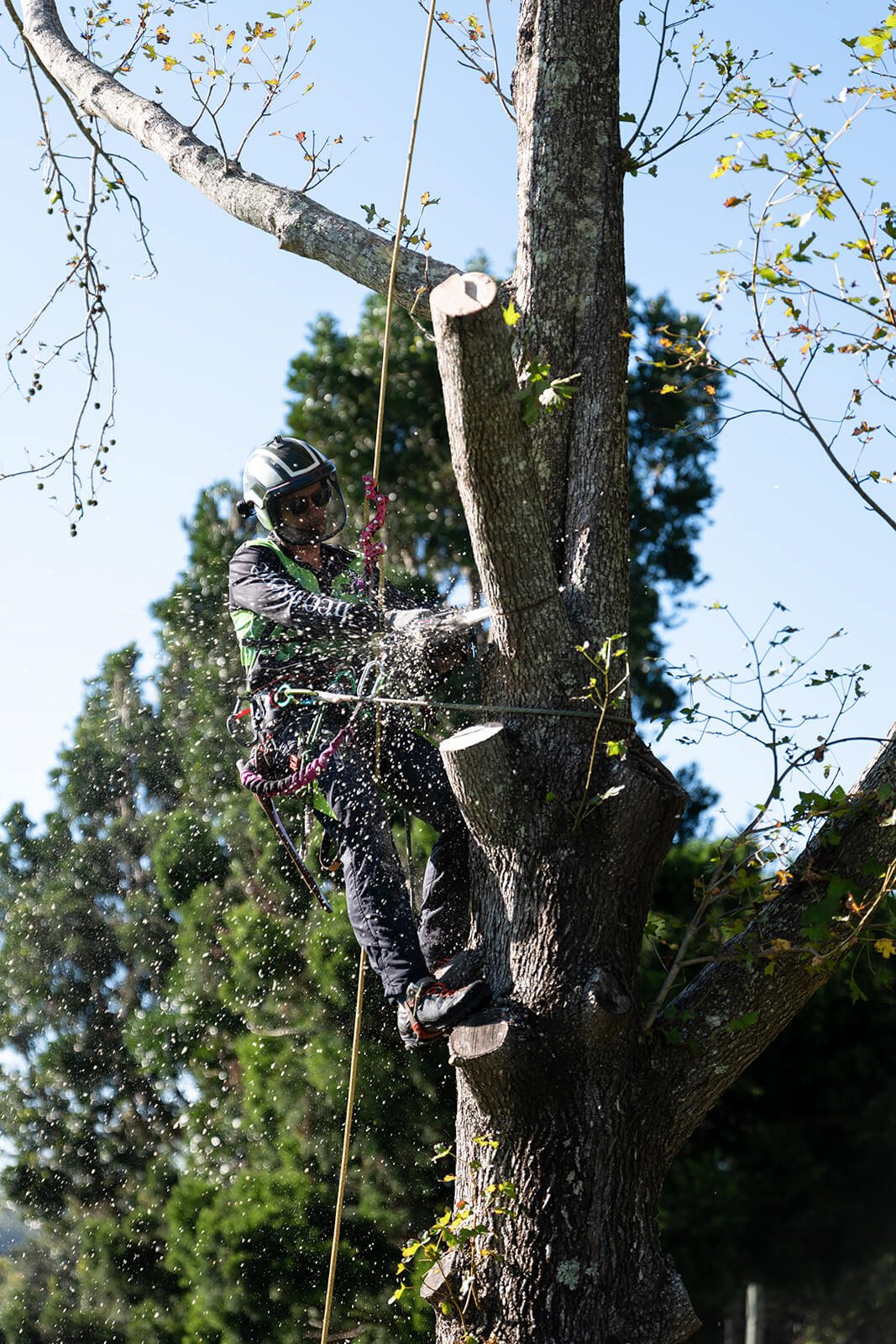
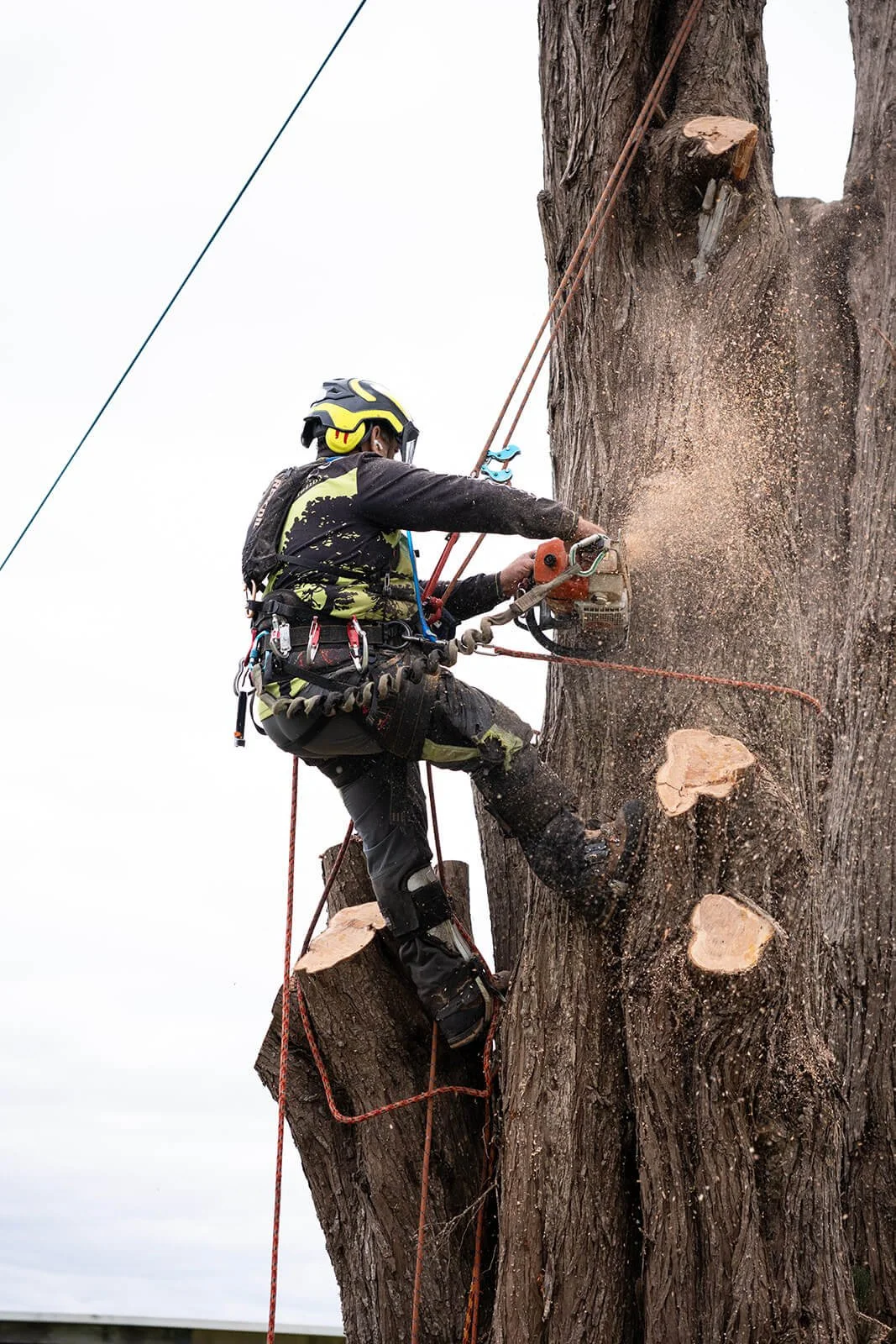
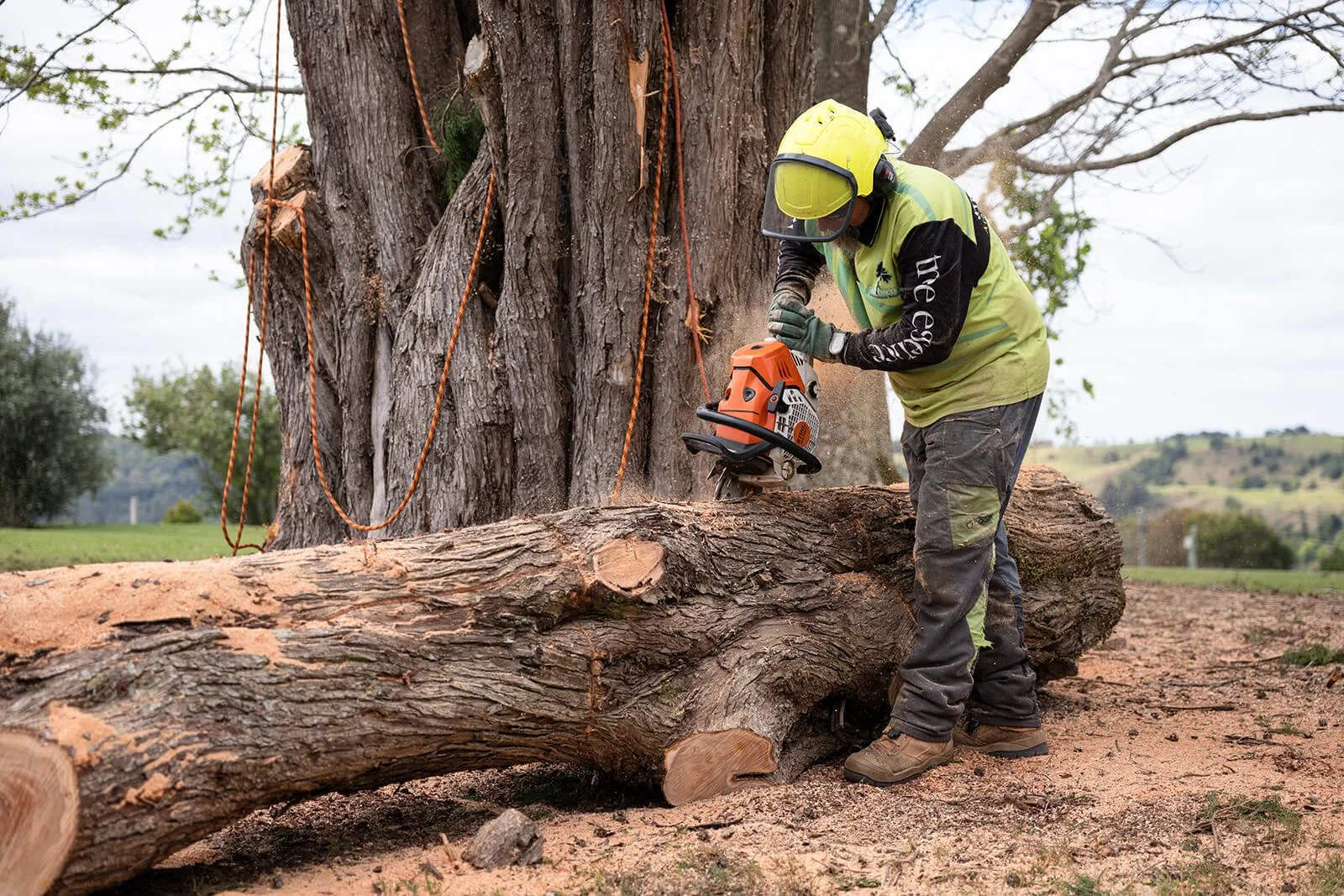
When inspection confirmed the cable had become the sole element preventing separation, the tree had passed the threshold of manageable risk. We gave the owner a clear, evidence-based account of how the condition had changed and why removal was now the recommendation. Having been part of the monitoring the whole way through, they understood and accepted it. The tree was removed by sectional dismantling suited to the slope and surrounding targets, and the stump ground out.
Arborist note
This tree is a good example of what responsible long-term management actually looks like. The cabling bought the owner years of safe retention of a tree they valued. Annual monitoring meant the deterioration was caught before a failure event, not after. The decision to remove was made on evidence, not assumption, and the owner was informed and involved the whole way through.
[ CALL-OUTS ]Storm response
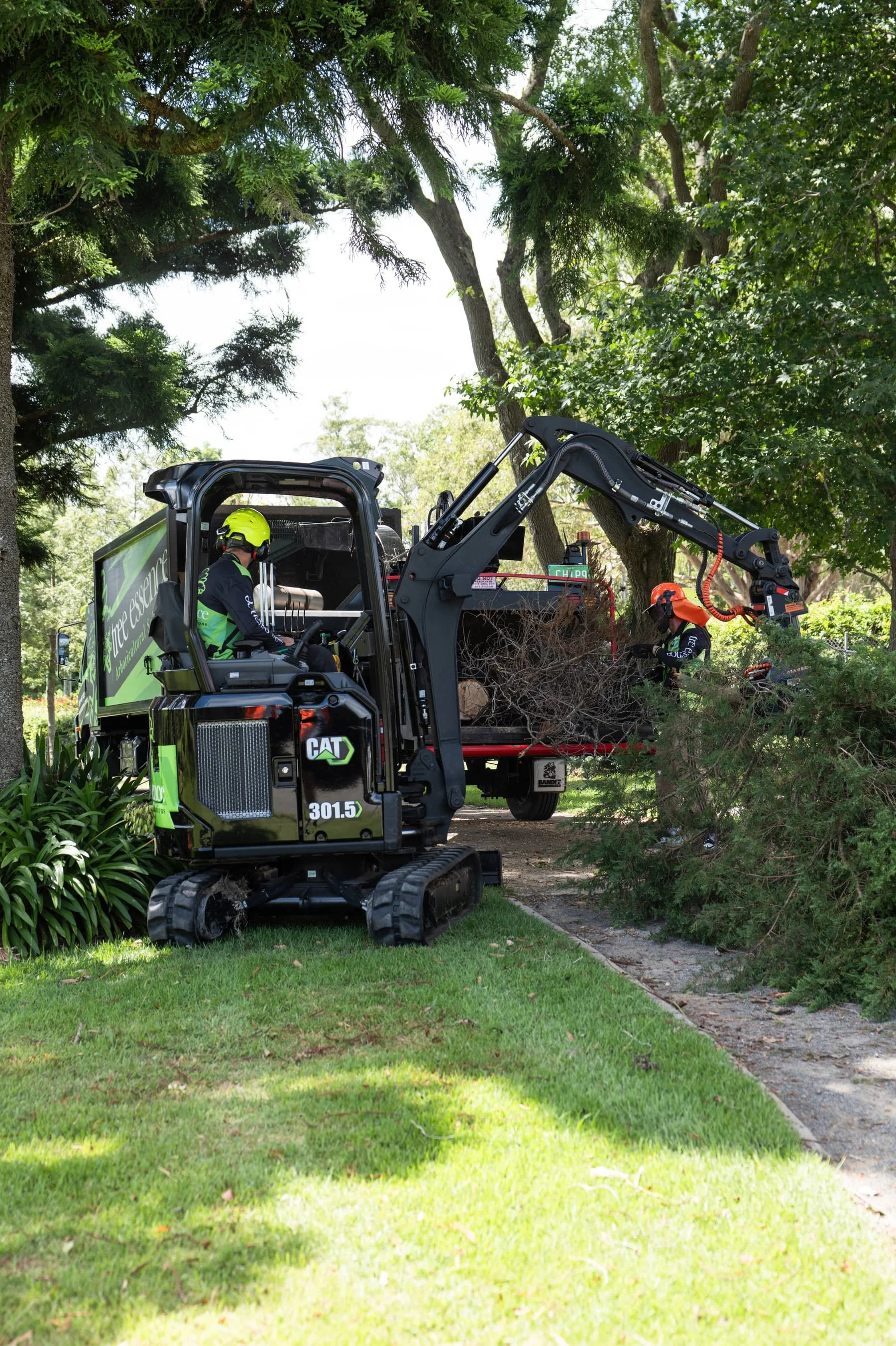
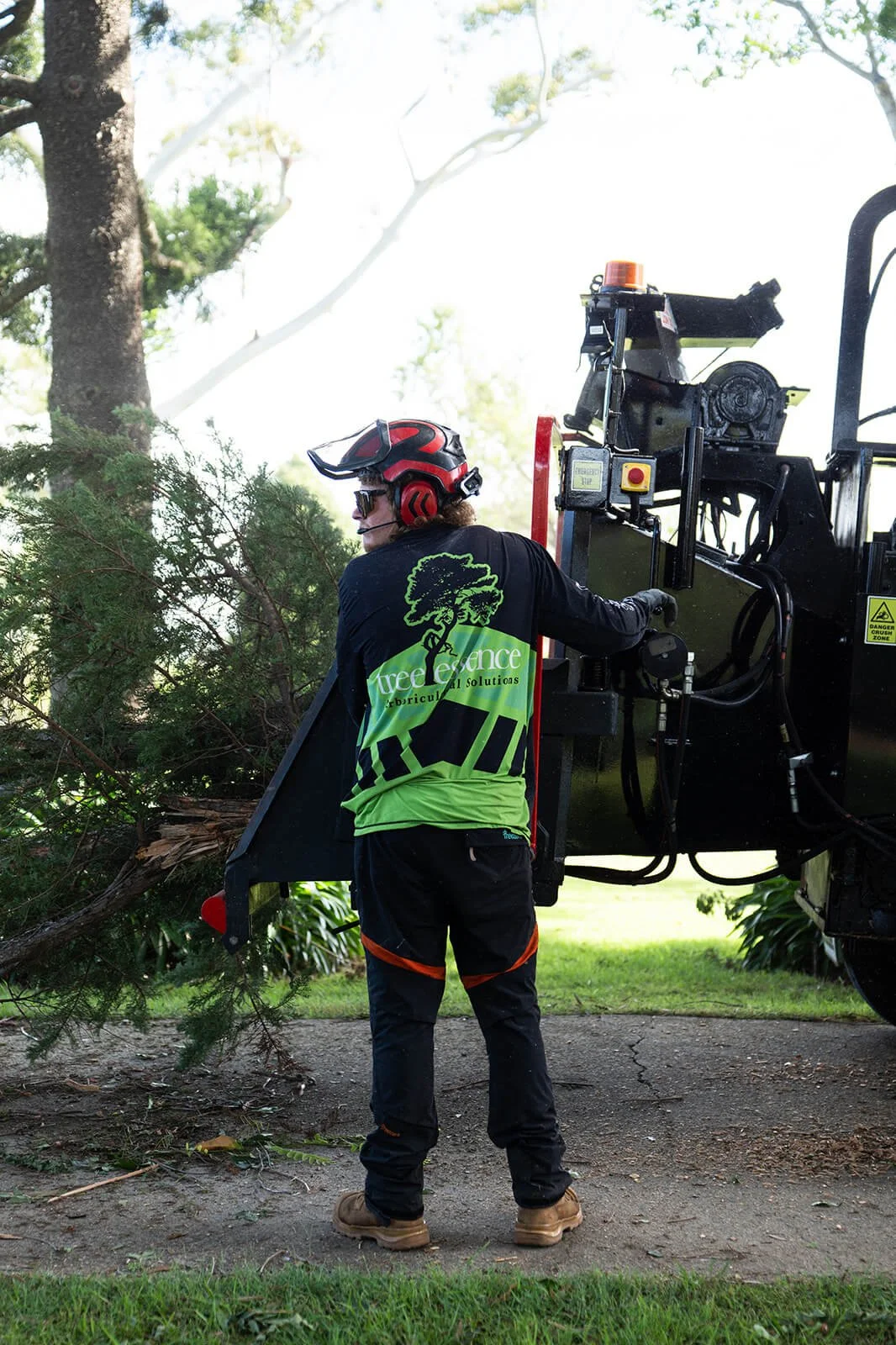
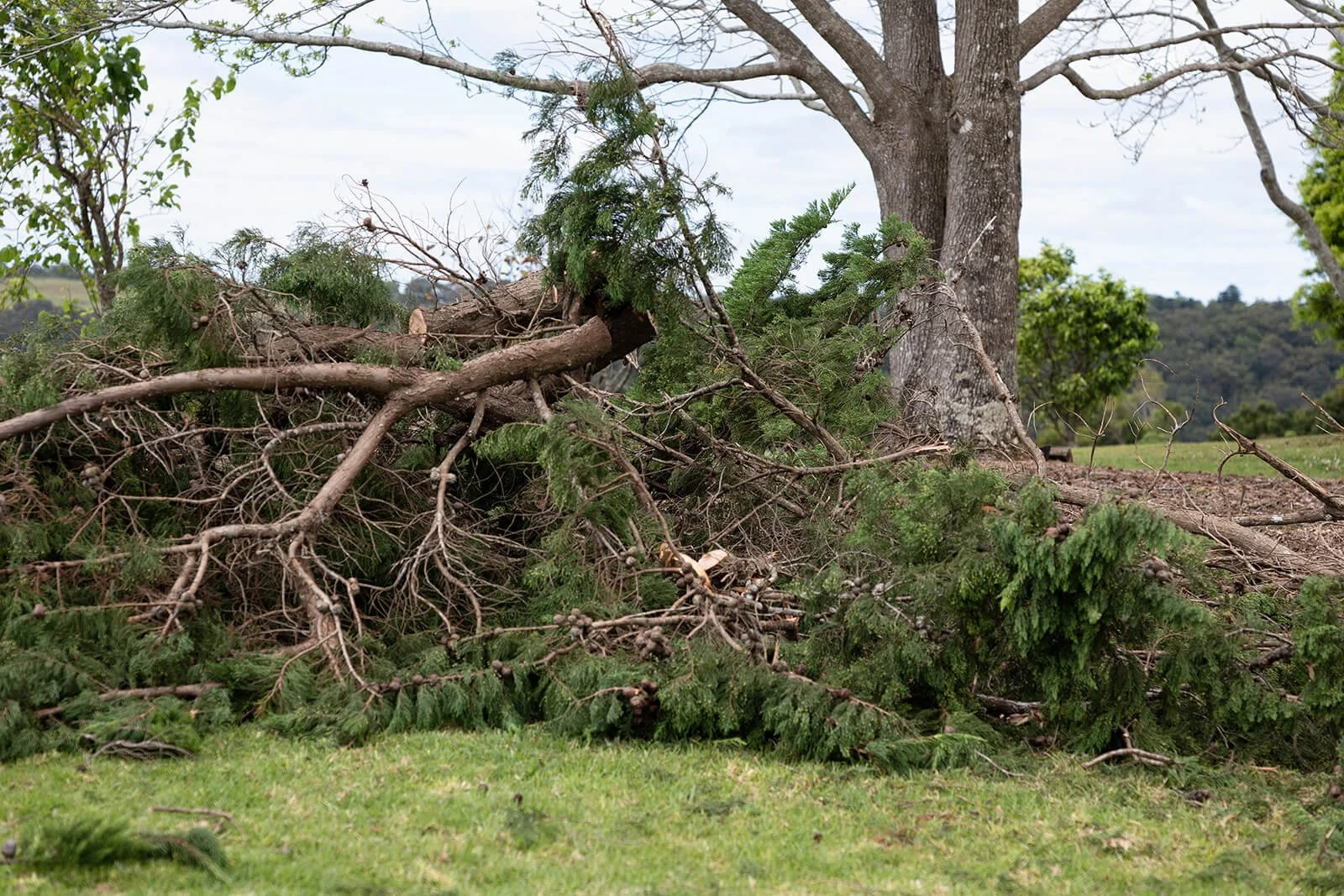
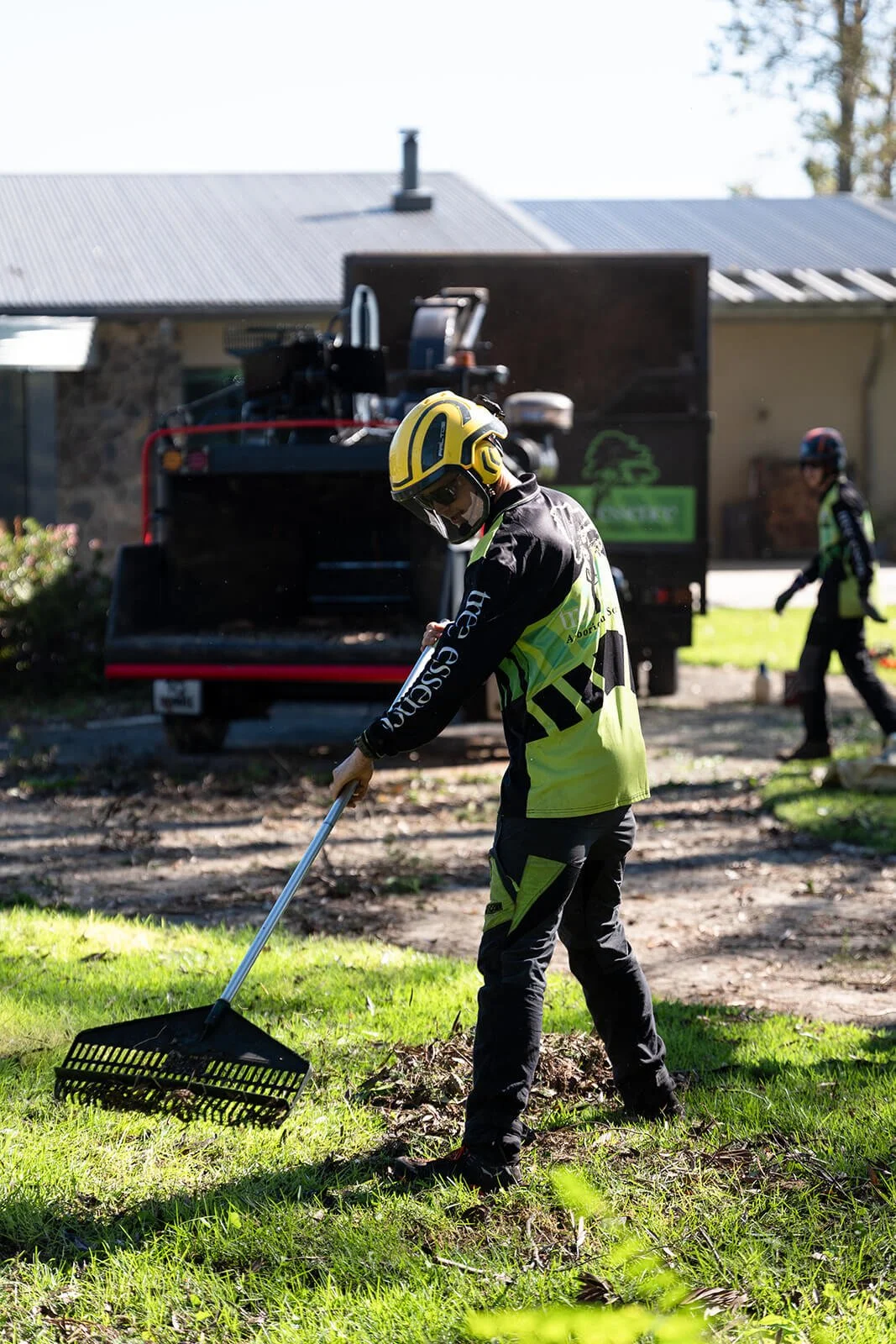
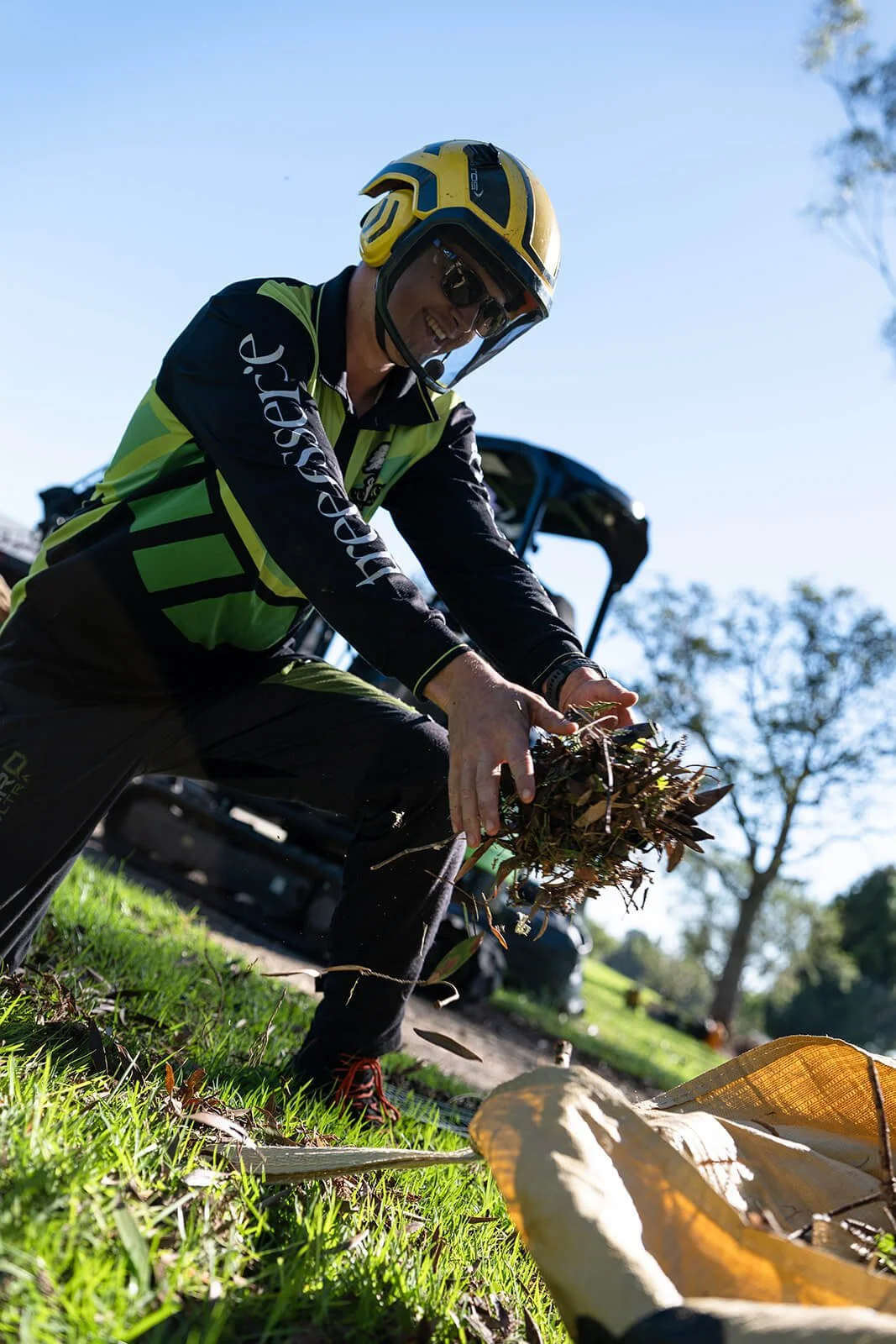
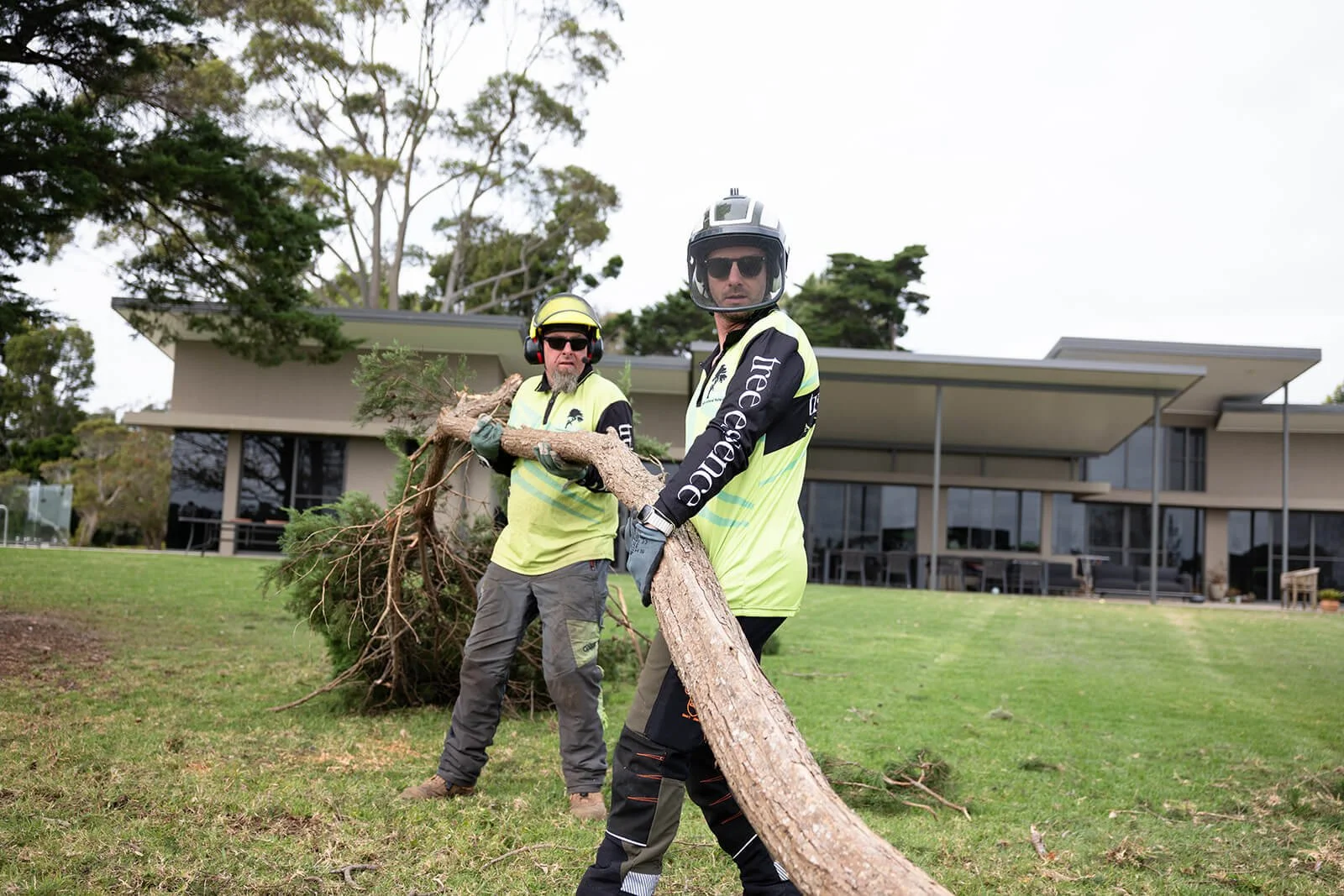
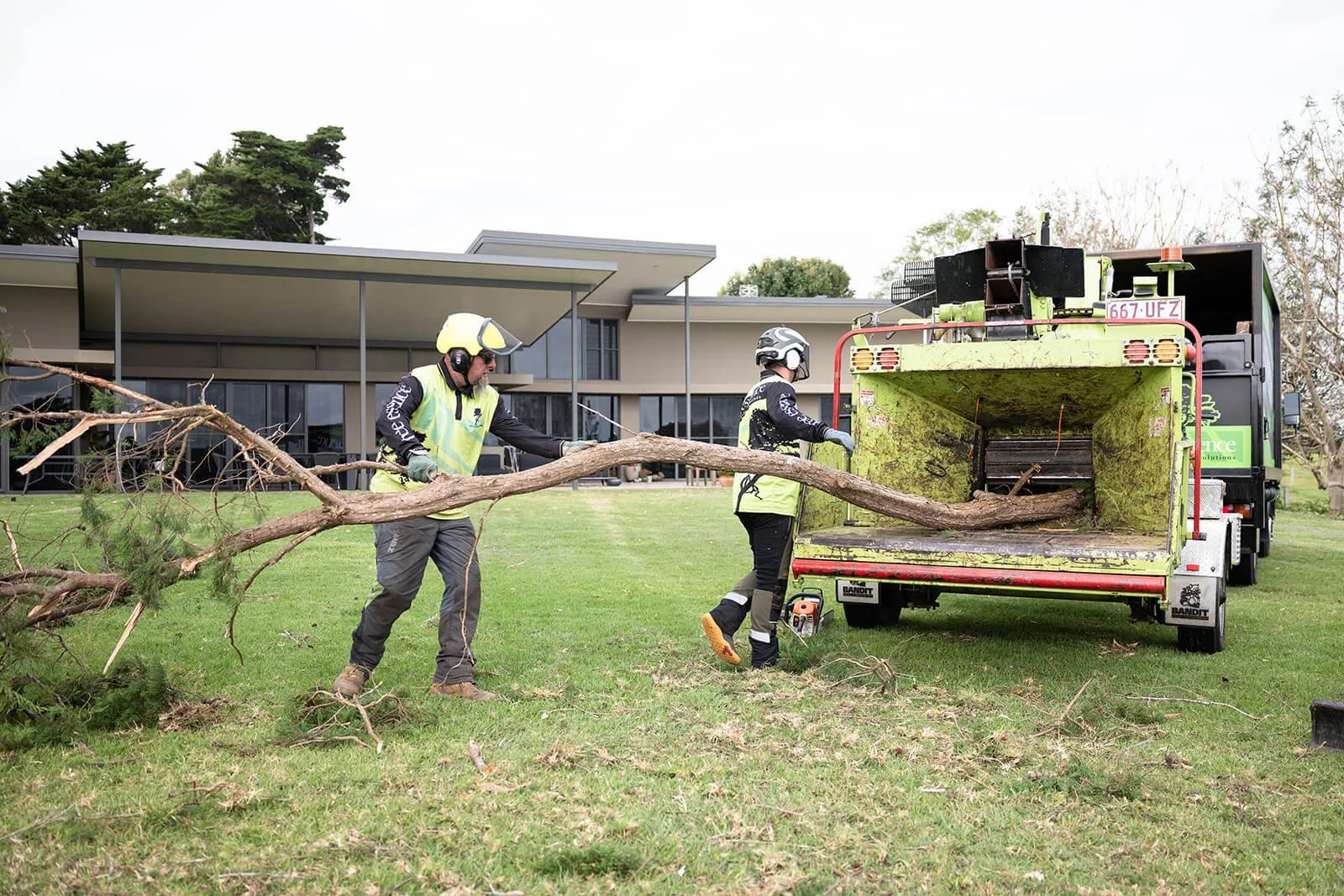
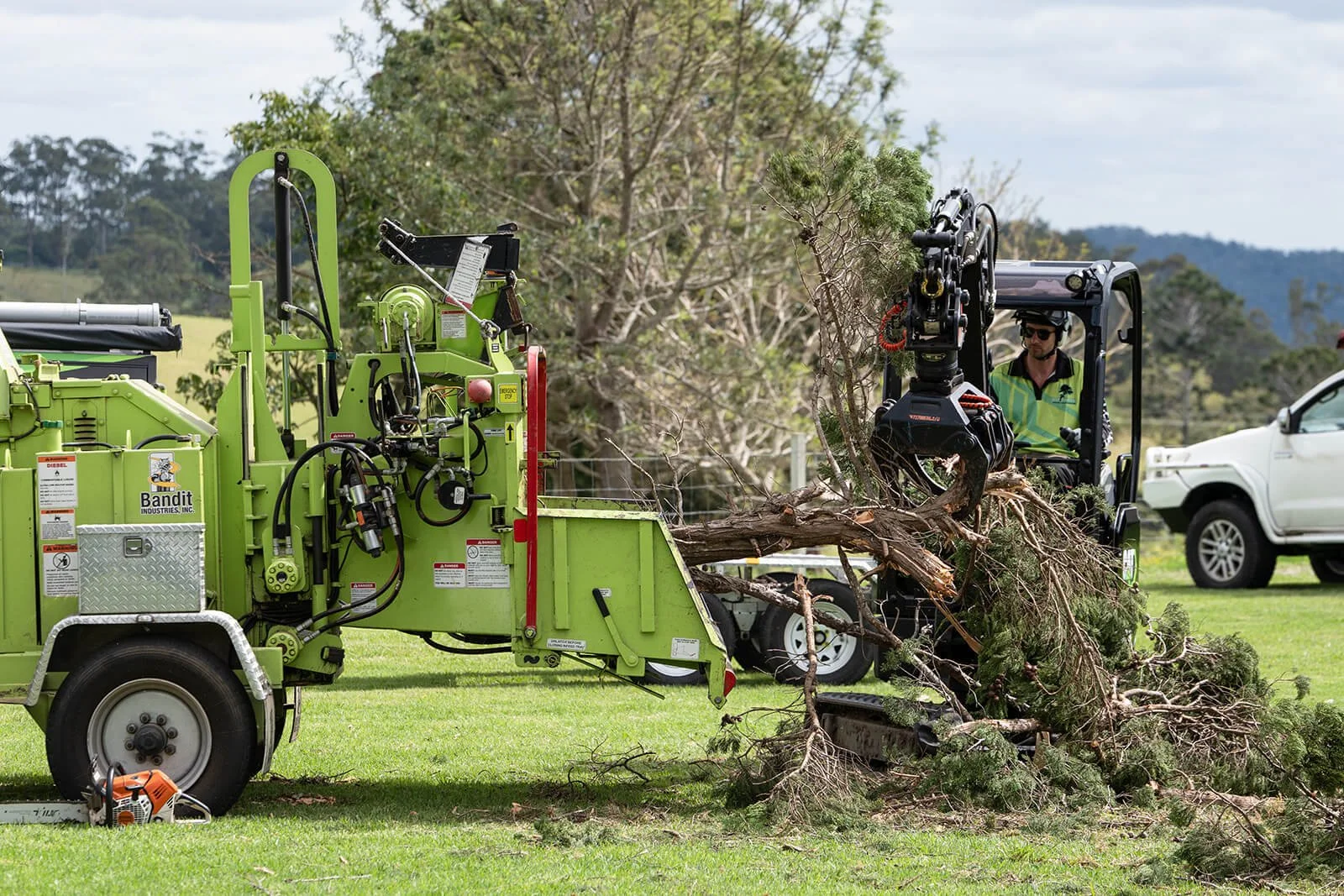
The exposed ridgeline makes this property particularly vulnerable through South East Queensland's summer storm season, and we've attended after significant weather events on several occasions. That work has included emergency assessment and make-safe of damaged trees, removing failed or partially failed limbs hung up in the canopy, triaging partially uprooted trees to decide what could be stabilised and what had to go, clearing debris from driveways and fence lines, and re-assessing previously cabled trees after extreme wind loading.
The advantage of an ongoing relationship is that we don't arrive as a new contractor. We arrive as the arborist who knows every significant tree on the site. That cuts assessment time, and means the response is grounded in years of context.
[ THE RESULT ]Outcomes
Structural integrity maintained
The mature canopy has come through multiple storm seasons without catastrophic failure.
Long-term canopy value preserved
Trees that could have been removed at first sign of defect have been retained for additional years through targeted intervention.
Informed removal decisions
Where trees have been recommended for removal, the owner has had a clear rationale built on years of documented monitoring, not a snap judgement.
Risk profile progressively reduced
Annual deadwood removal, lateral reduction, and canopy management have steadily cut the inventory of high-risk conditions on site.
Responsive storm recovery
Multiple post-storm attendances have restored safety and amenity quickly, with site knowledge reducing assessment time and cost.
In the client's words
We've had Tree Essence looking after our trees for years now and we wouldn't trust anyone else with them. The property's up on the hill and it cops a hammering in a storm. Jamie and the crew know every tree on the place. They know which ones have been cabled, which ones we've been watching, and they give us an honest assessment every time. That big cypress was a hard decision in the end, but they walked us through it and we understood why. We know our trees are in the right hands.
Disclaimer: This case study has been prepared by Tree Essence for general business development and information purposes. Client details are presented with consent. Works described were conducted by qualified personnel in accordance with applicable Australian Standards and industry best practice at the time of engagement. This document does not constitute a formal arborist report or tree management plan
[ ABOUT ]Tree care grounded in knowledge.
Tree Essence is a family-run arborist business founded in 2013, backed by more than 20 years of hands-on experience. We're AQF Level 5 qualified arborists working across South East Queensland and the Northern Rivers, covering complete tree and palm care for residential, commercial, and rural properties, from consulting and structural pruning through to complex removals, stump grinding, soil amelioration, and specialist habitat creation.
Whatever the job, it comes back to the same thing: do it properly, leave the site clean, and deliver a result you don't have to second guess.
[ CONTACT ]