
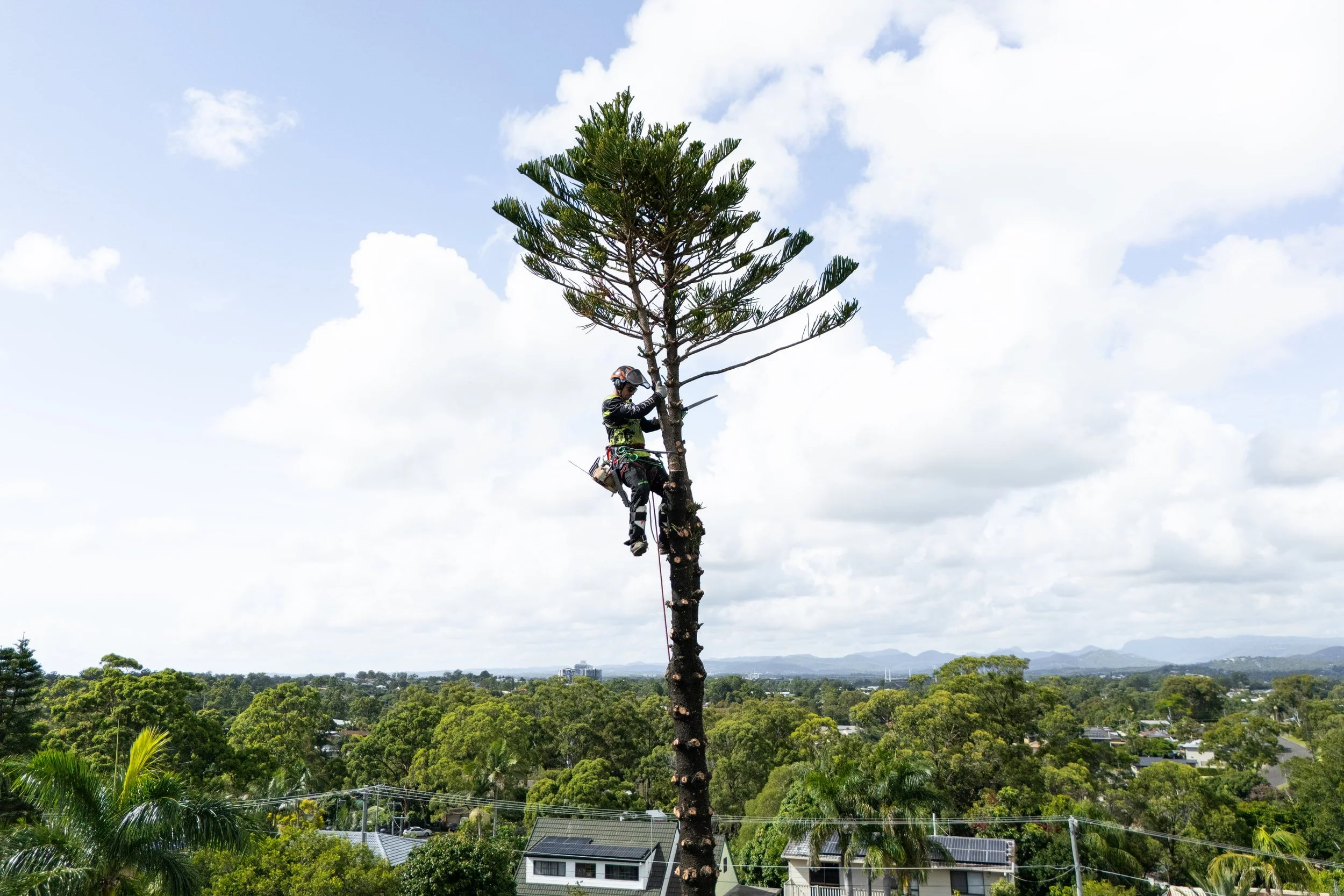
Nerang
[ CASE STUDY ]At a glance
Nerang, Gold Coast, QLD
Location
Norfolk Island Pine (Araucaria heterophylla)
Species
Full removal by sectional dismantling at the boundary line
Scope
Focus
Precision sectioning
Extreme height, confined drop zones, branch-failure history, neighbour protection
Technicality
Jamie Montgomery, AQF Level 5
Prepared by
[ OVERVIEW ]Large-Scale Pine Removal
The brief
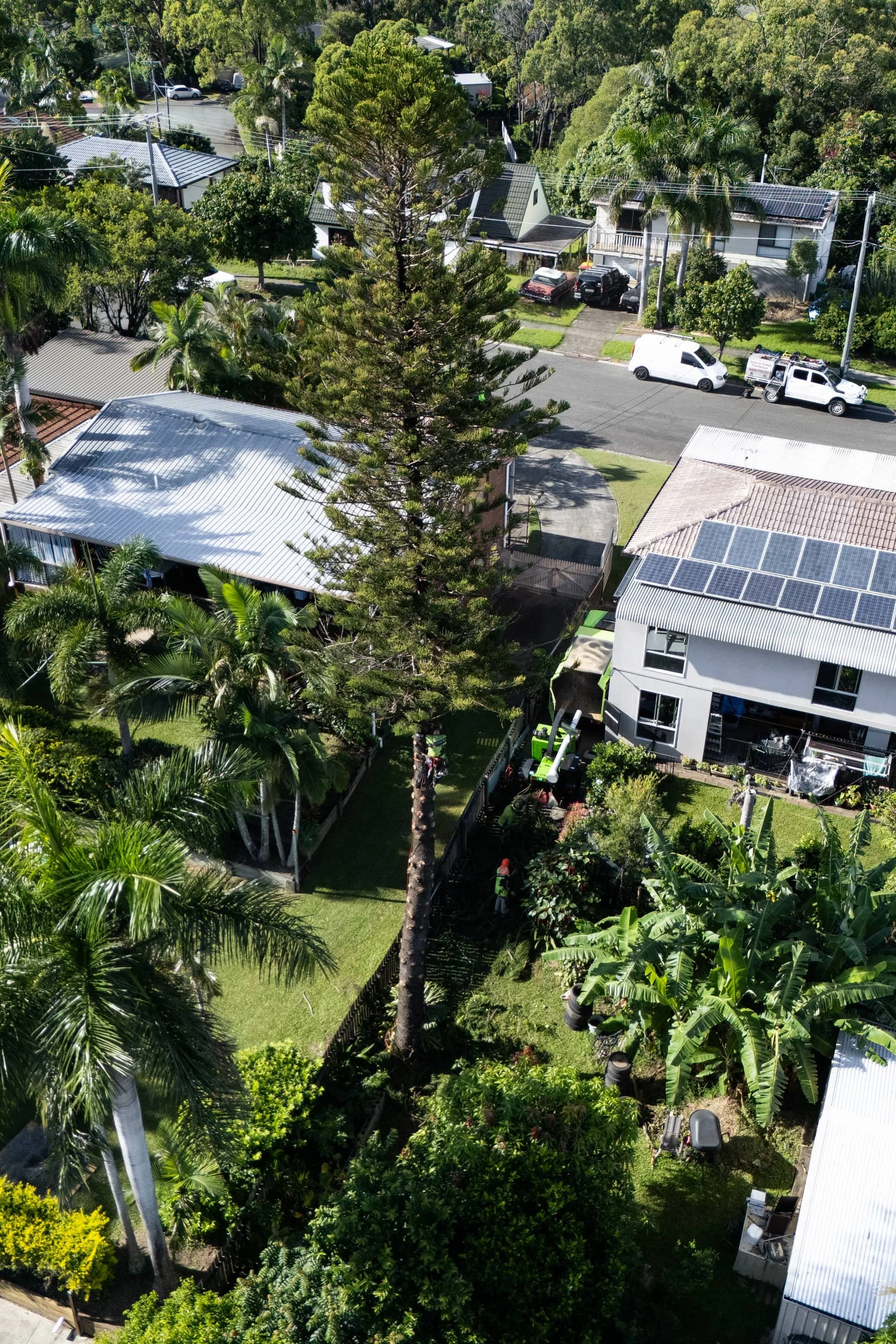
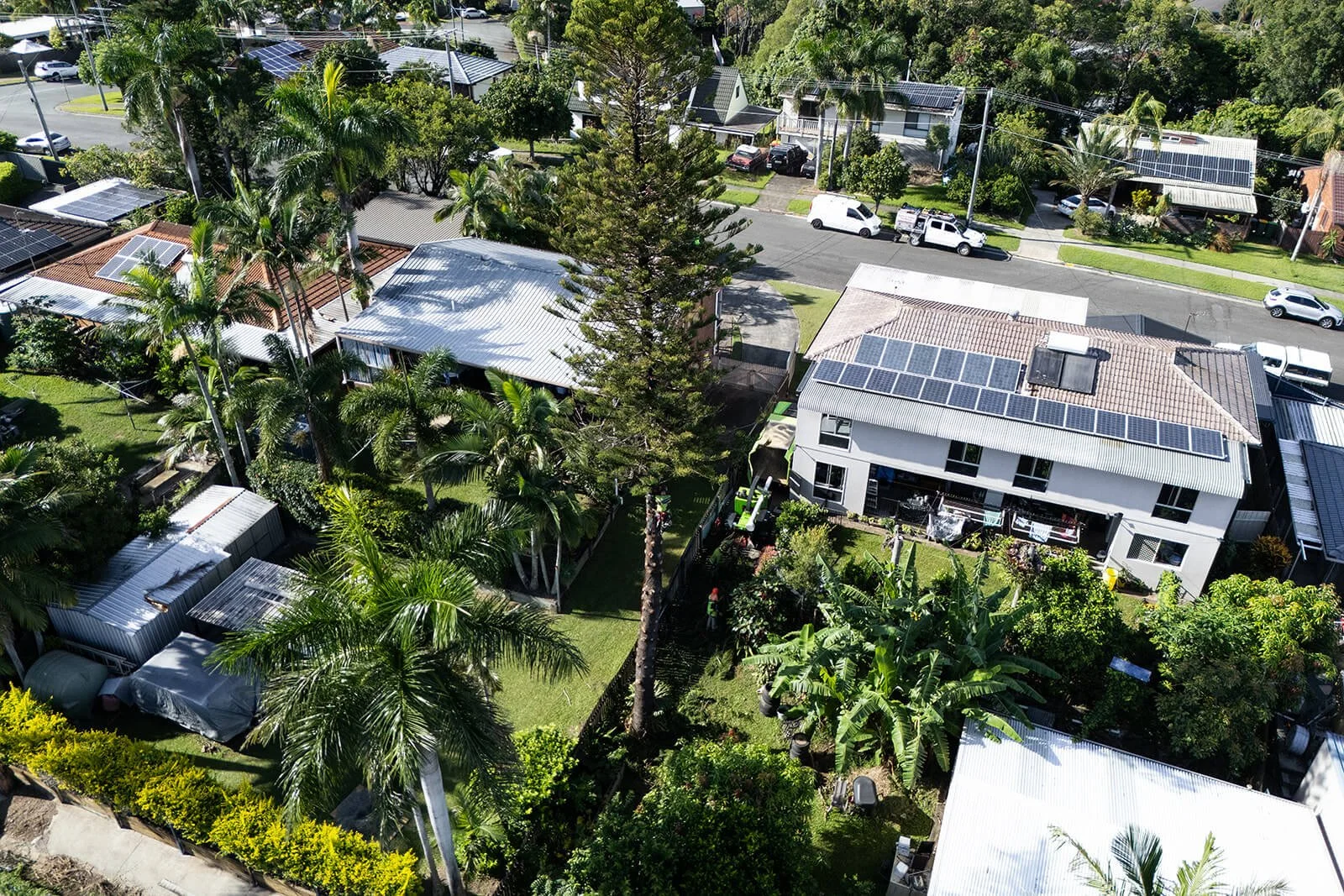
The property featured a large, mature Norfolk Island Pine growing close to the shared boundary with the neighbour. Over time it had shed branches, some of significant size, onto the neighbour's side of the fence, causing damage and raising a legitimate concern about ongoing risk to people and property.
Having lived through repeated branch-drop incidents, and with the tree positioned so that any future failure would almost certainly land next door, the client made a considered decision: remove it, and eliminate the risk at source rather than keep managing a tree that had shown a clear pattern of shedding beyond the boundary.
The client's decision
Retaining the tree meant continued exposure to property damage, strained relations with the neighbour, and potential liability. Removal was the responsible, definitive solution. The client engaged Tree Essence to carry it out safely.
[ THE TREE ]The species, and the risk
Norfolk Island Pines are a familiar sight across the Gold Coast: distinctive, widely planted, and among the largest trees encountered in suburban arboriculture. In residential settings they commonly exceed 20–30 metres, and sometimes considerably more. Their height, combined with a branch architecture of lateral whorls extending horizontally from a central leader, creates a specific and well-documented pattern of risk.
Broadleaf species tend to fail through decay, co-dominant unions, or included bark. Norfolk Island Pines are different: they shed branches through a natural process. As the tree matures, lower whorls die back and drop. In a healthy tree this is gradual self-pruning. But several factors accelerate it:
Species risk note
Taller, heavier trees carry more dead branch mass in the lower whorls
Age and size:
Even moderate gusts dislodge dead or weakened laterals, especially in the lower and mid-crown
Wind:
Drought or root competition makes shedding faster and less predictable
Stress:
A tree on the fence line has part of its crown over the neighbour by definition, so shedding in that zone lands next door
Boundary position:
Once a pine has reached full height and started shedding, the risk profile climbs. Branches from the mid and upper crown are dense and heavy, and the impact energy from a limb falling 20 metres or more is substantial.
Norfolk Island Pines aren't structurally defective in the traditional sense. They're doing what the species does. But their height, shedding behaviour, and typical placement on older residential blocks means removal is frequently the most proportionate response once branch-drop incidents are on record. The risk is real, the consequences of further shedding are predictable, and the options for meaningful remediation are limited.
[ OUR APPROACH ]Planning and constraints
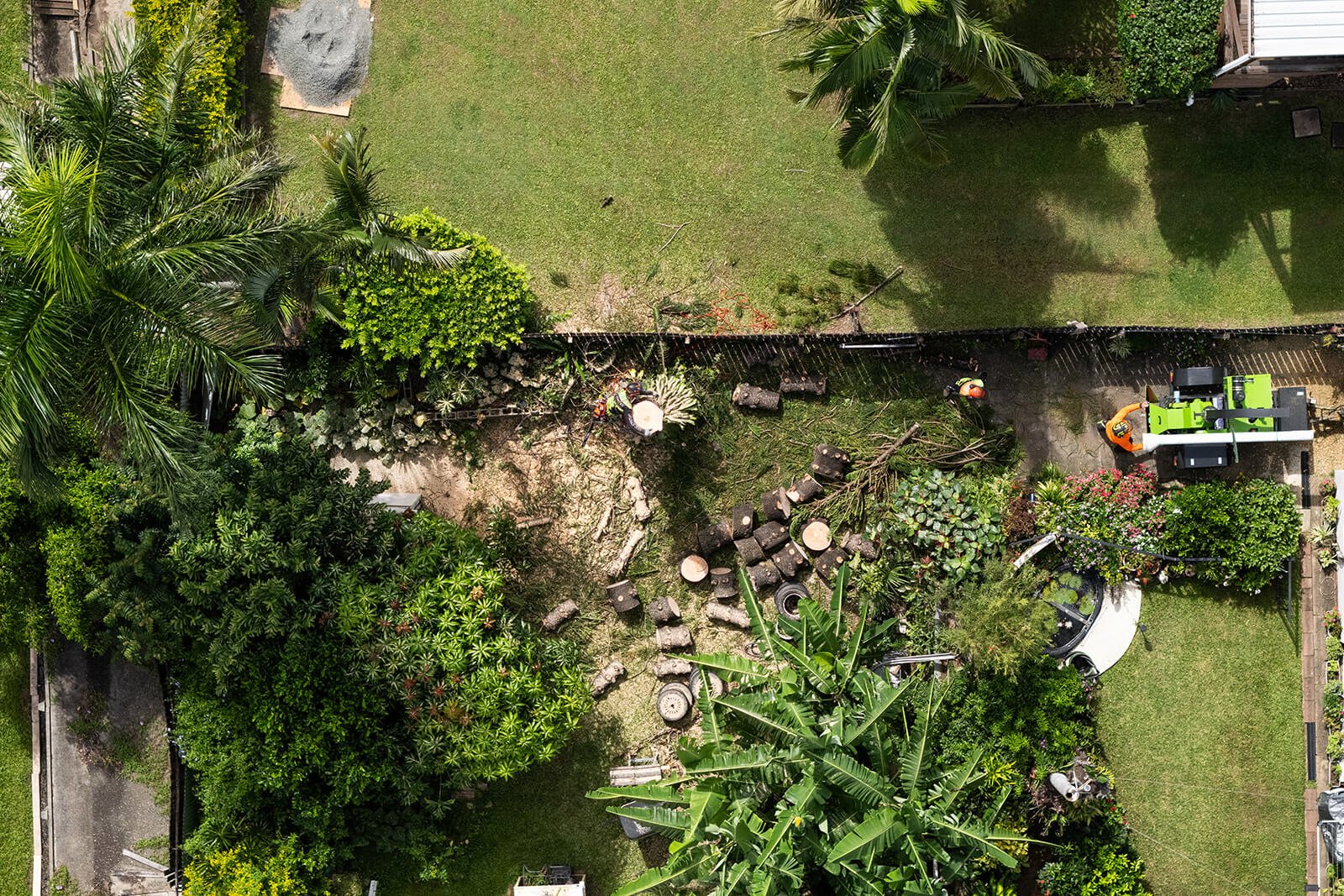
Before any cutting began, we assessed the site to understand the constraints and plan the dismantling sequence: total height and branch mass at each level of the crown, the fence position relative to the trunk and the extent of overhang, the available drop zones and ground conditions, structures on both sides of the fence, machinery and chipper access, and the anchor and rigging points within the crown.
Constraint
How we manage it
The full height of the pine required climbing and working well above standard residential tree work. All operations above the lowest access point were carried out by experienced climbing arborists using appropriate PPE and fall-arrest systems.
Extreme height
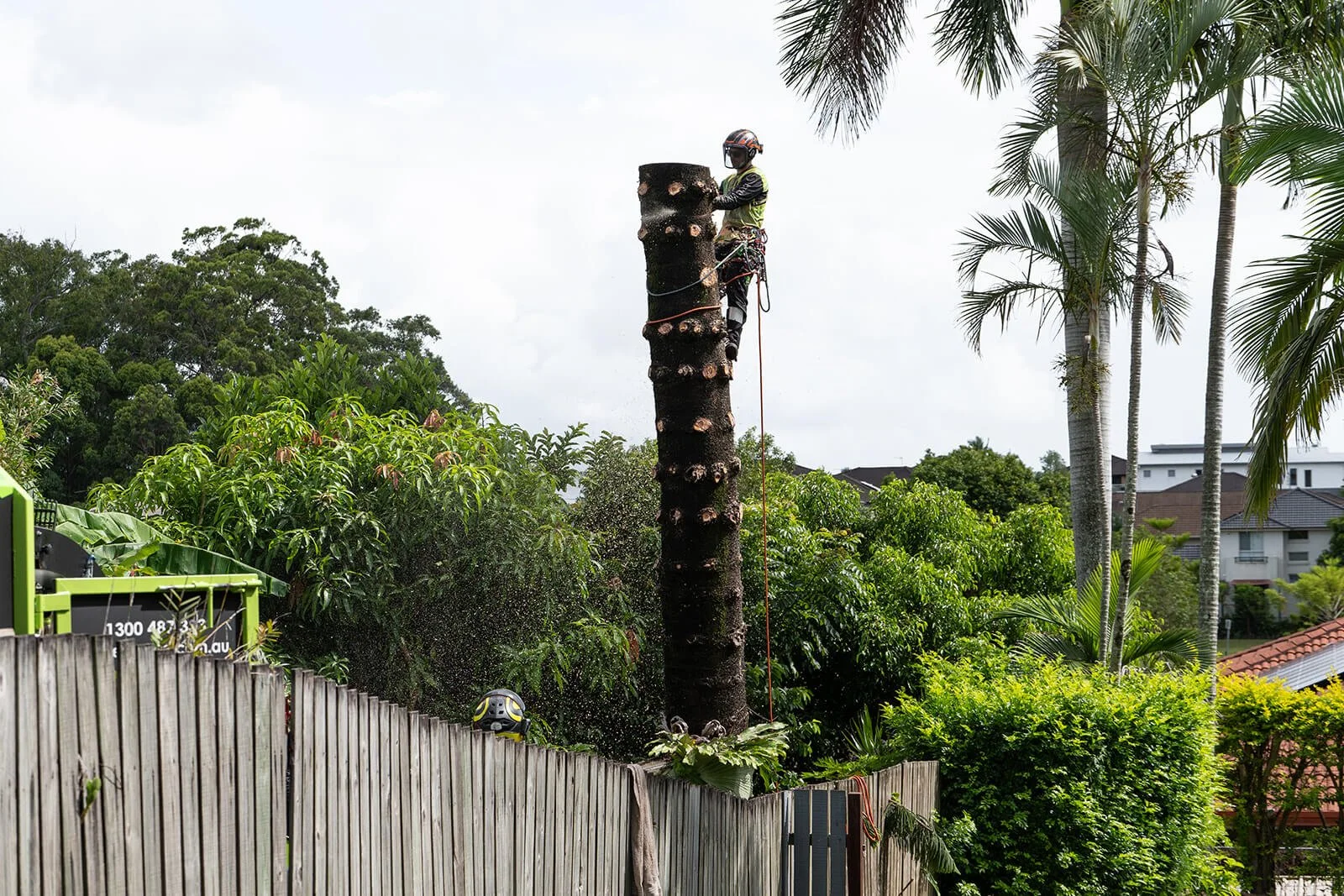
With the fence and neighbouring structures so close, no freefall was permissible on the boundary side. Every section on the neighbour-facing aspect was rigged and lowered under control.
Confined drop zone
With shedding already on record, the crown was approached with heightened awareness of further spontaneous failure during the works. Dead and weakened material in the upper crown was dealt with first.
Branch-failure history
Works were coordinated with the neighbour so their property was clear of people during the removal, and the shared fence line was protected throughout.
Neighbour access
The upper sections of a mature pine carry significant centralised mass. Sectional cuts were sized to stay within the safe working load of the rigging system.
Stem mass at height
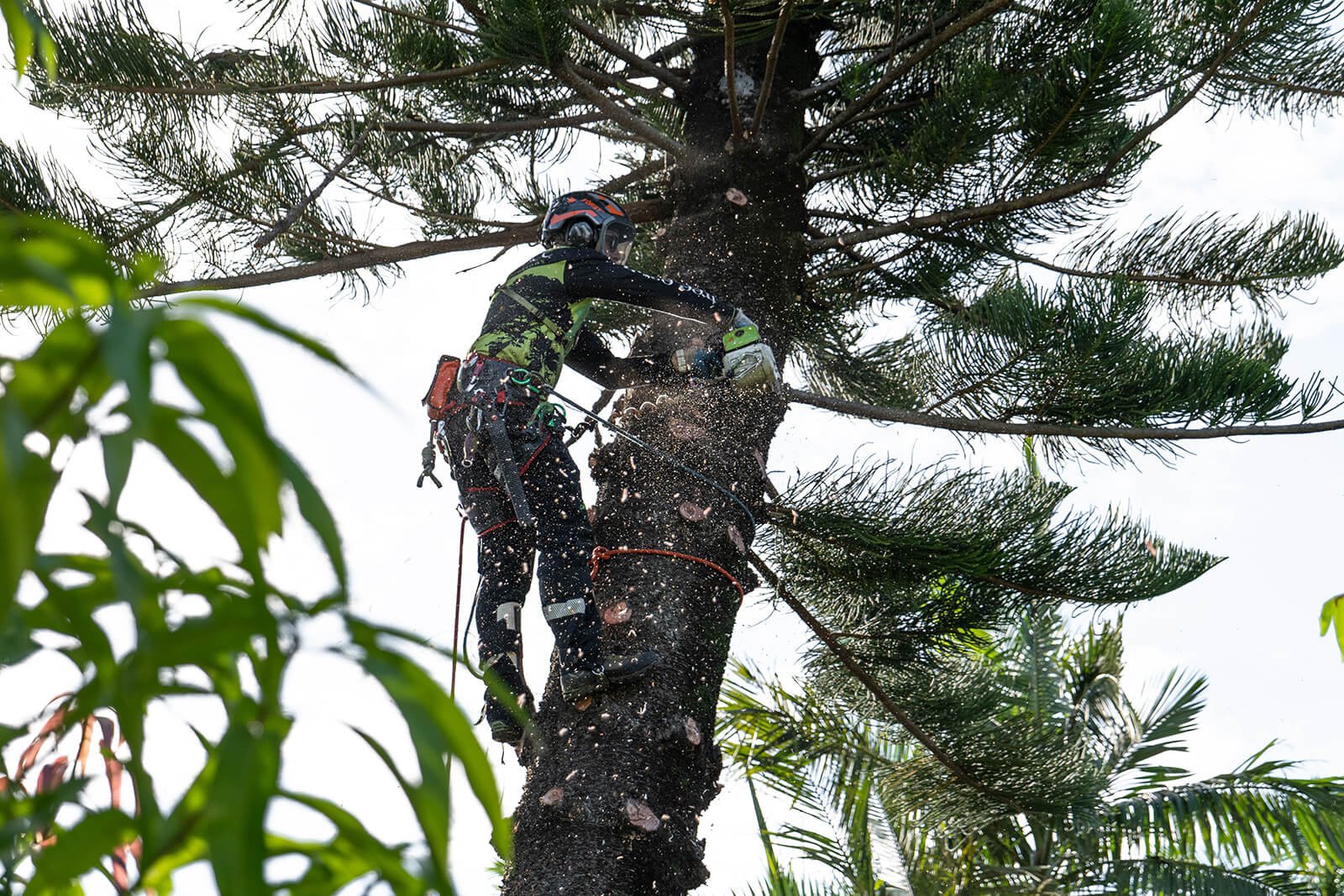
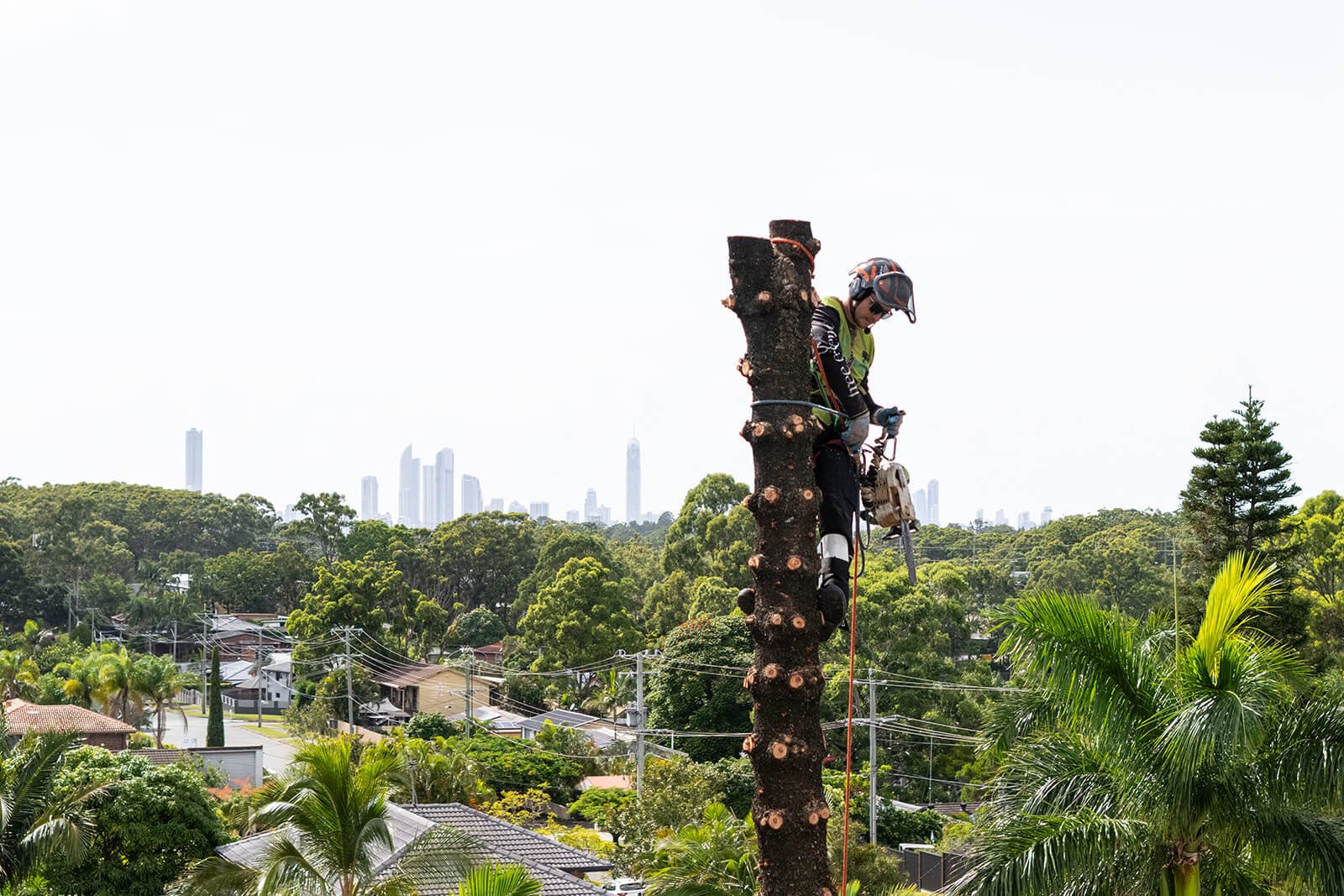
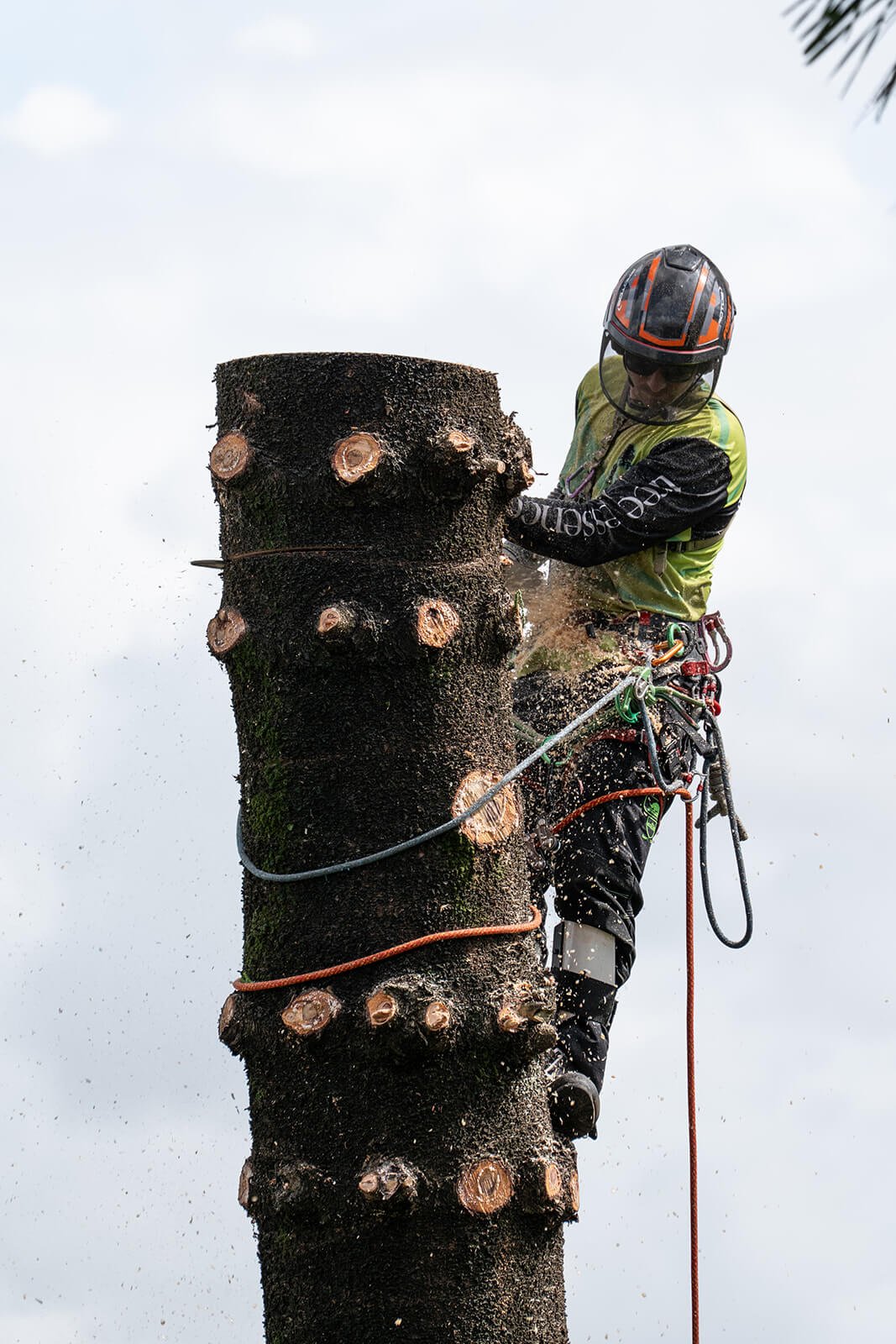
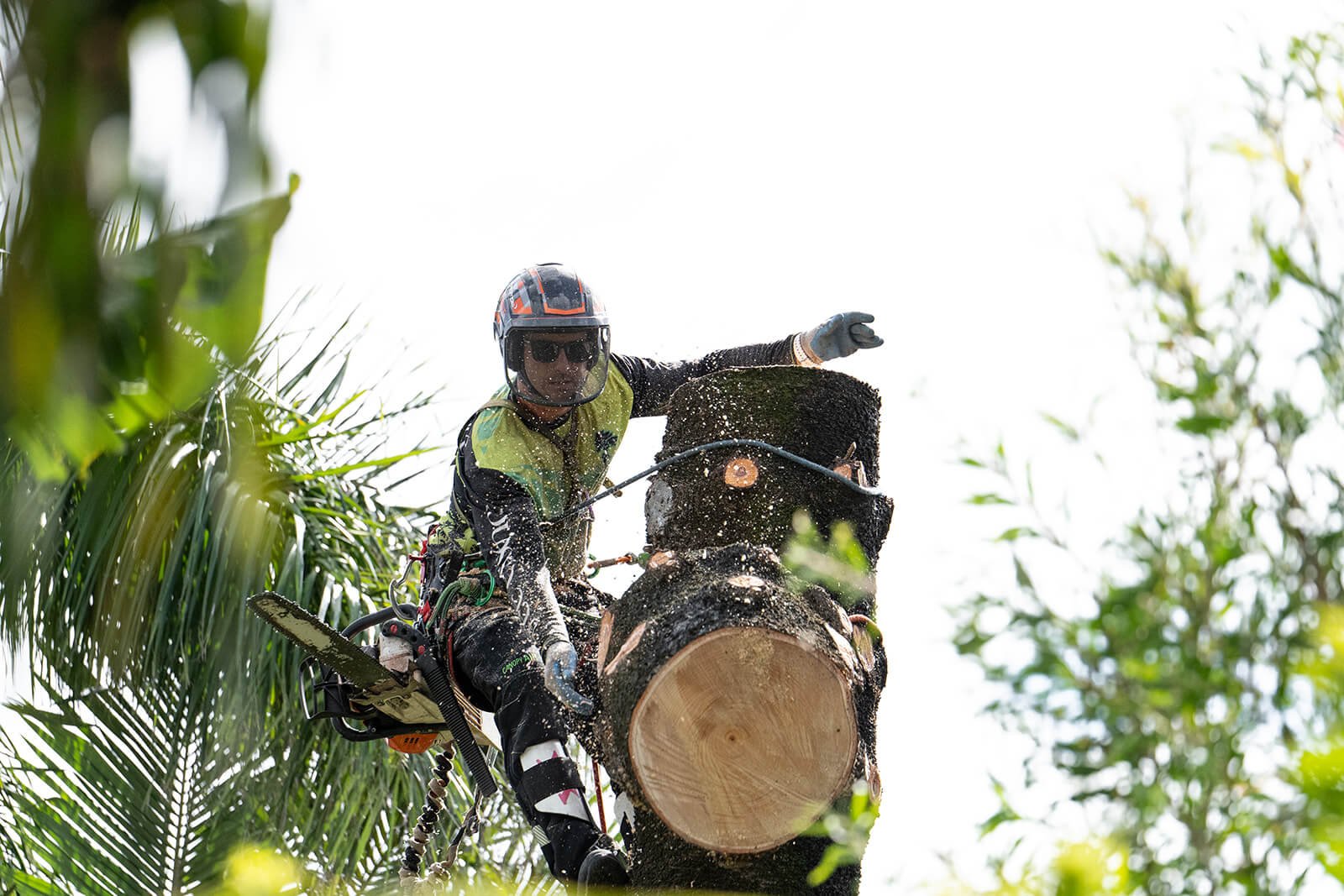
[ THE WORK ]A removal like this can't be approached as a freefall. The combination of extreme height, confined drop zones, and the structural character of the species calls for a methodical, sequenced dismantle from the top of the tree to the bottom.
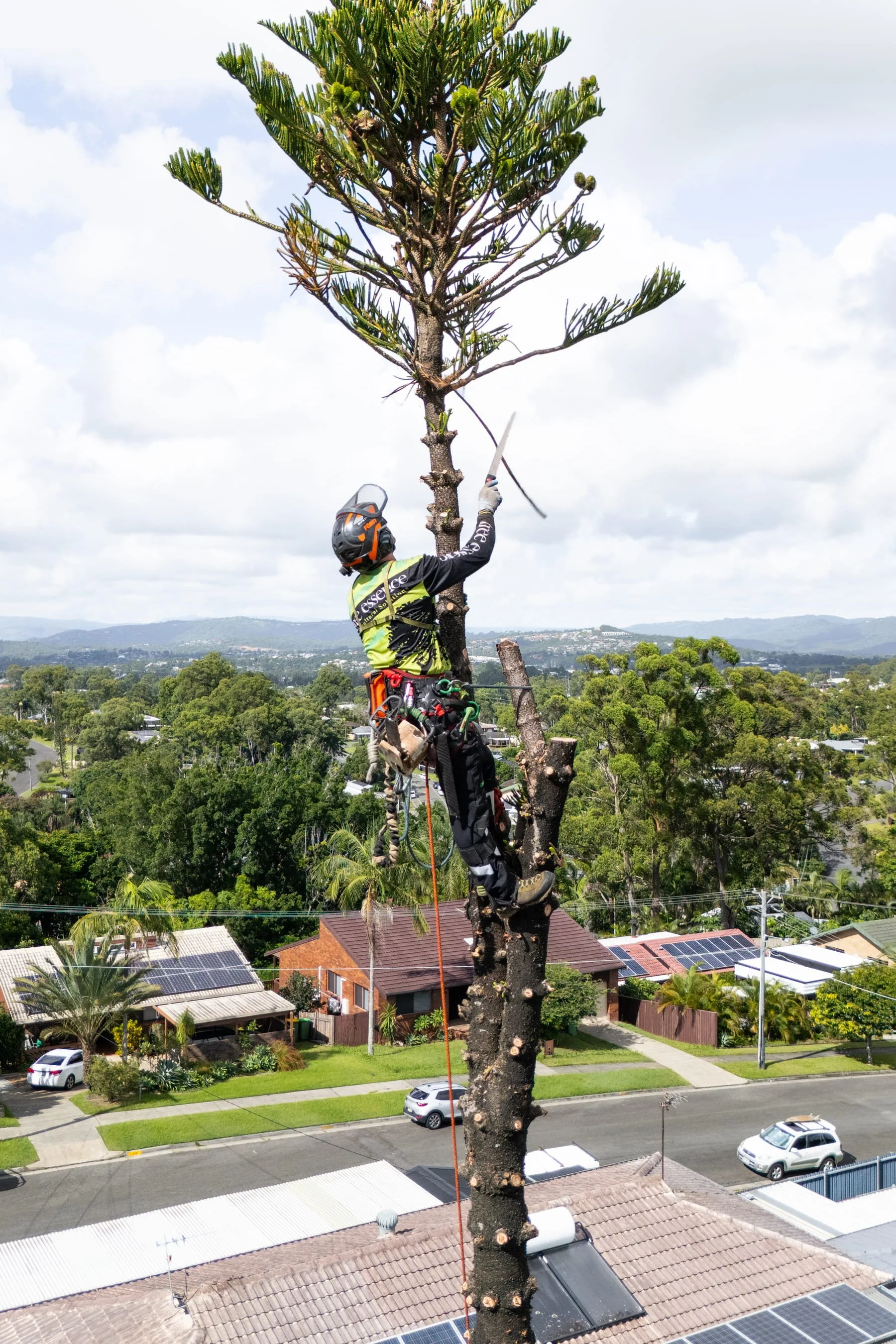
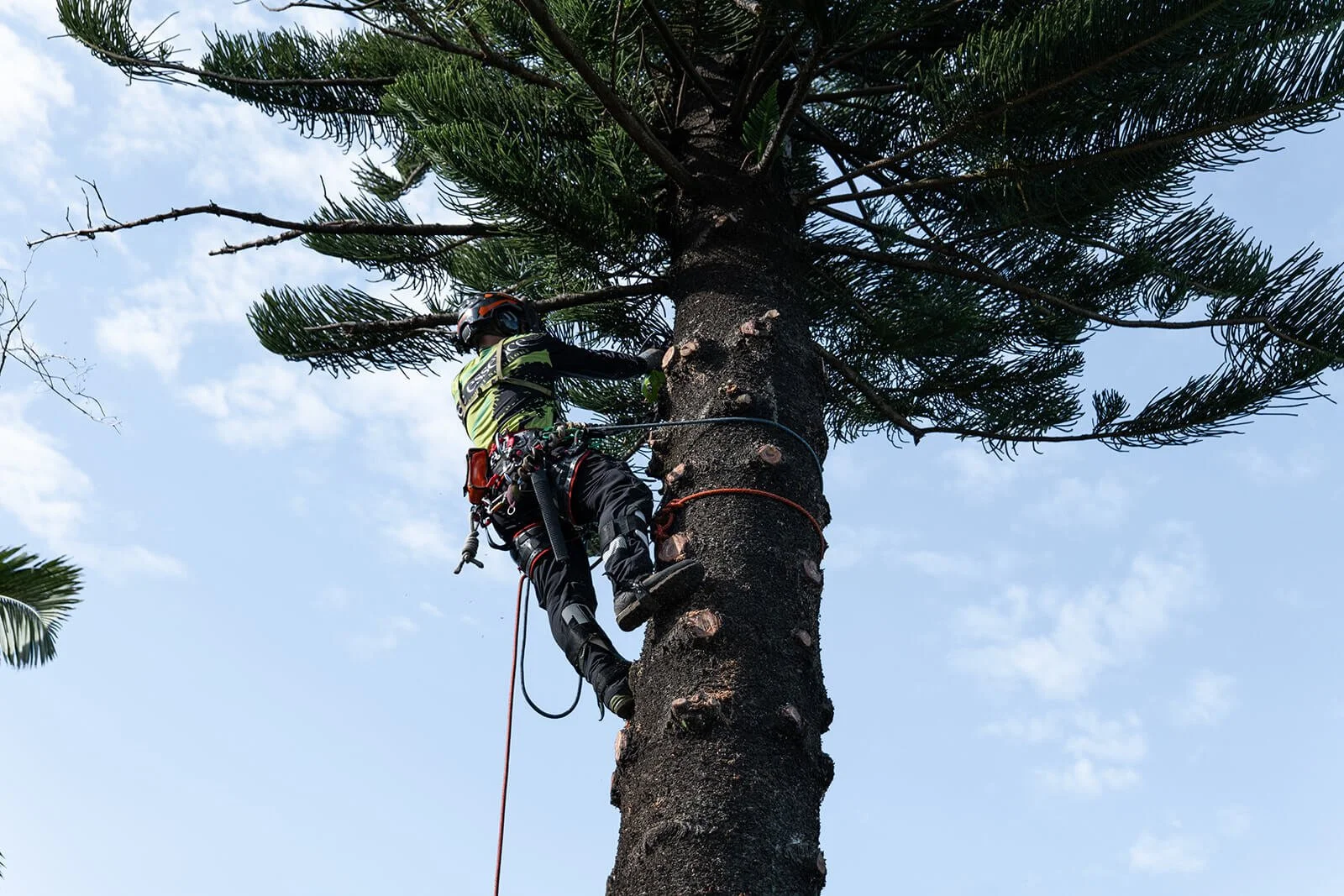
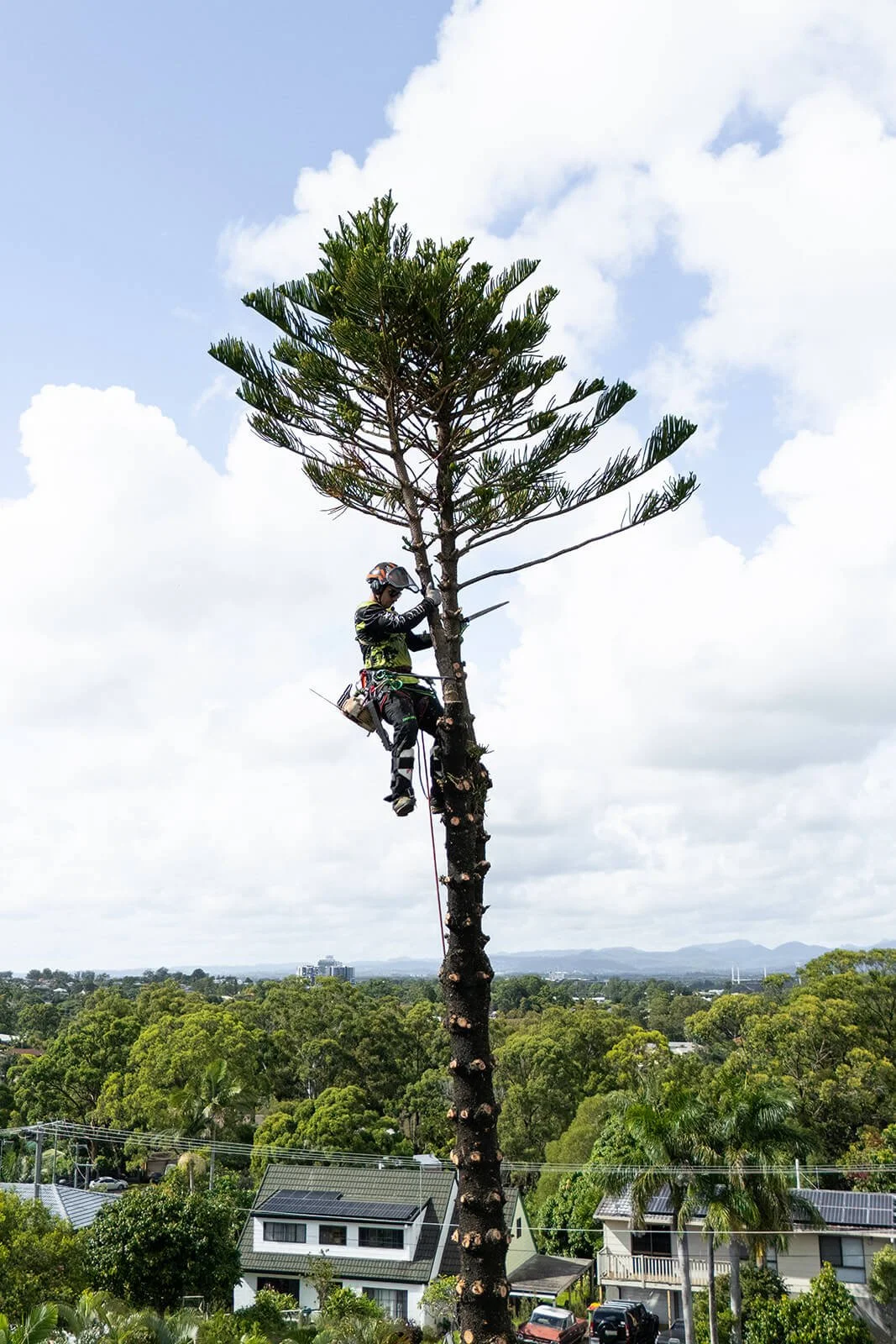
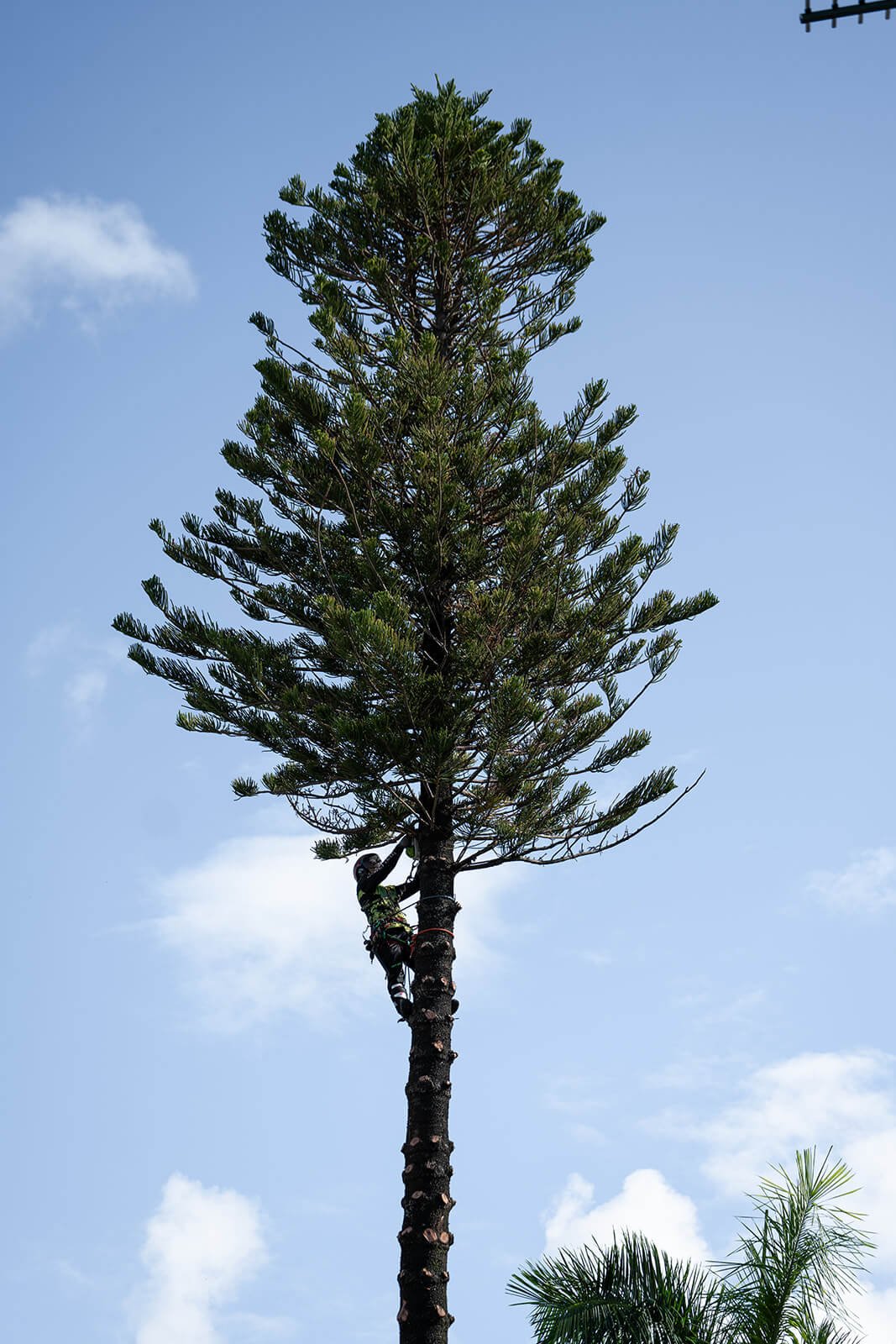
We worked the crown from the apex down, breaking it into zones as the climber descended the stem:
The dismantle — sectional removal from the top down
Apex and upper crown
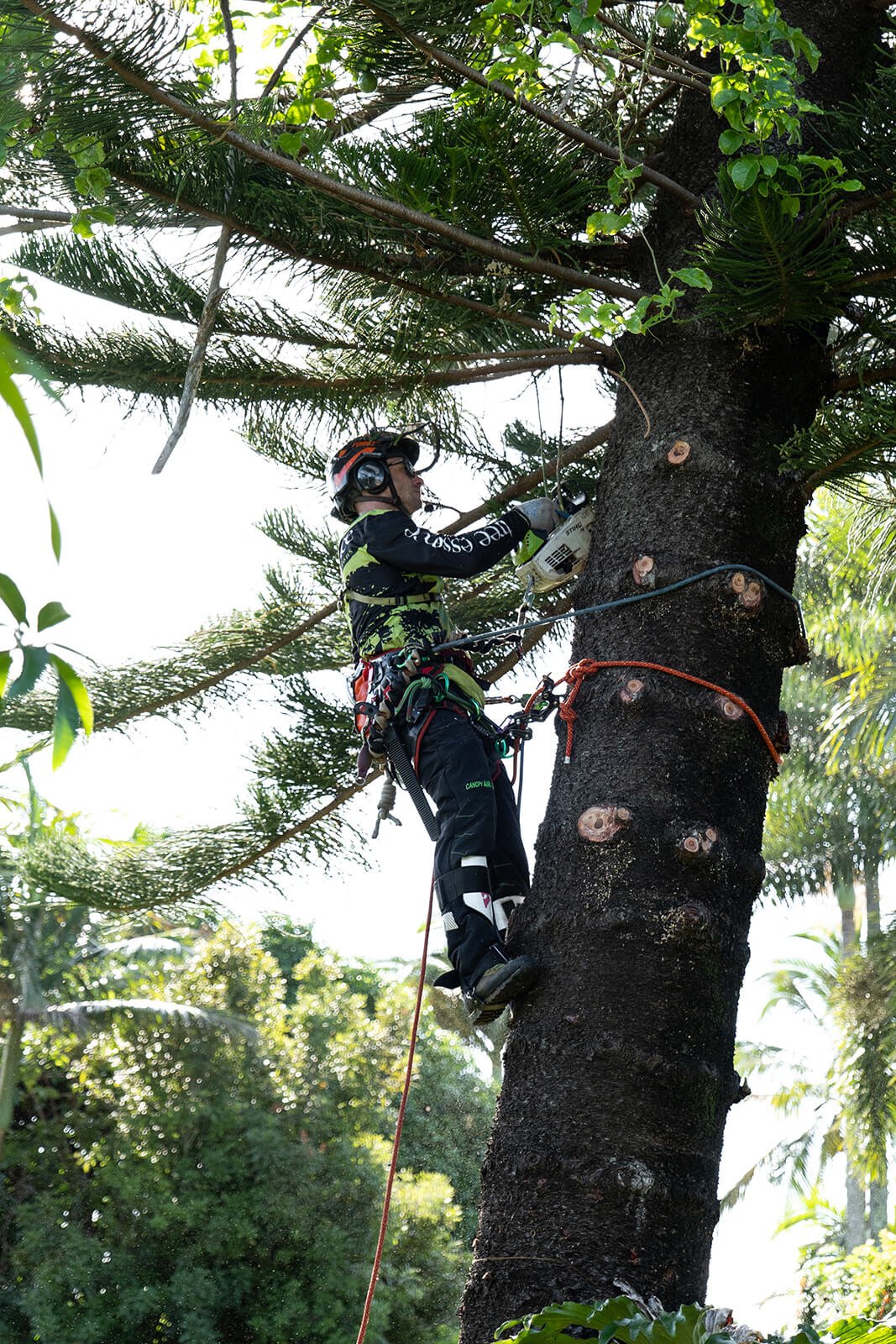
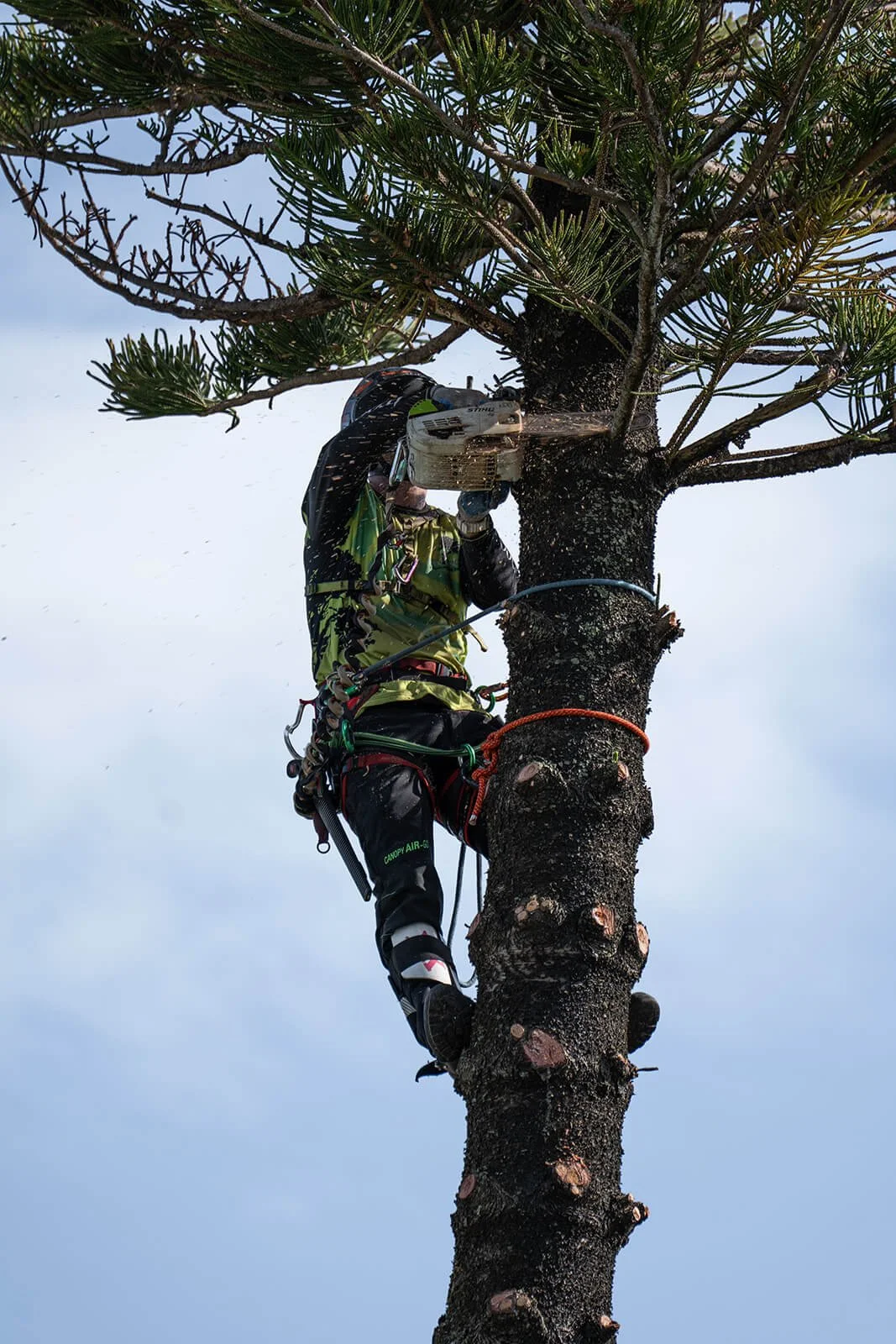
The leader and uppermost whorls first, each lateral cut and lowered individually on rigging anchored to the stem below. The topmost sections are the most exposed to wind movement and the most likely to shed spontaneously if left in place while lower work goes on.
Mid-crown whorls
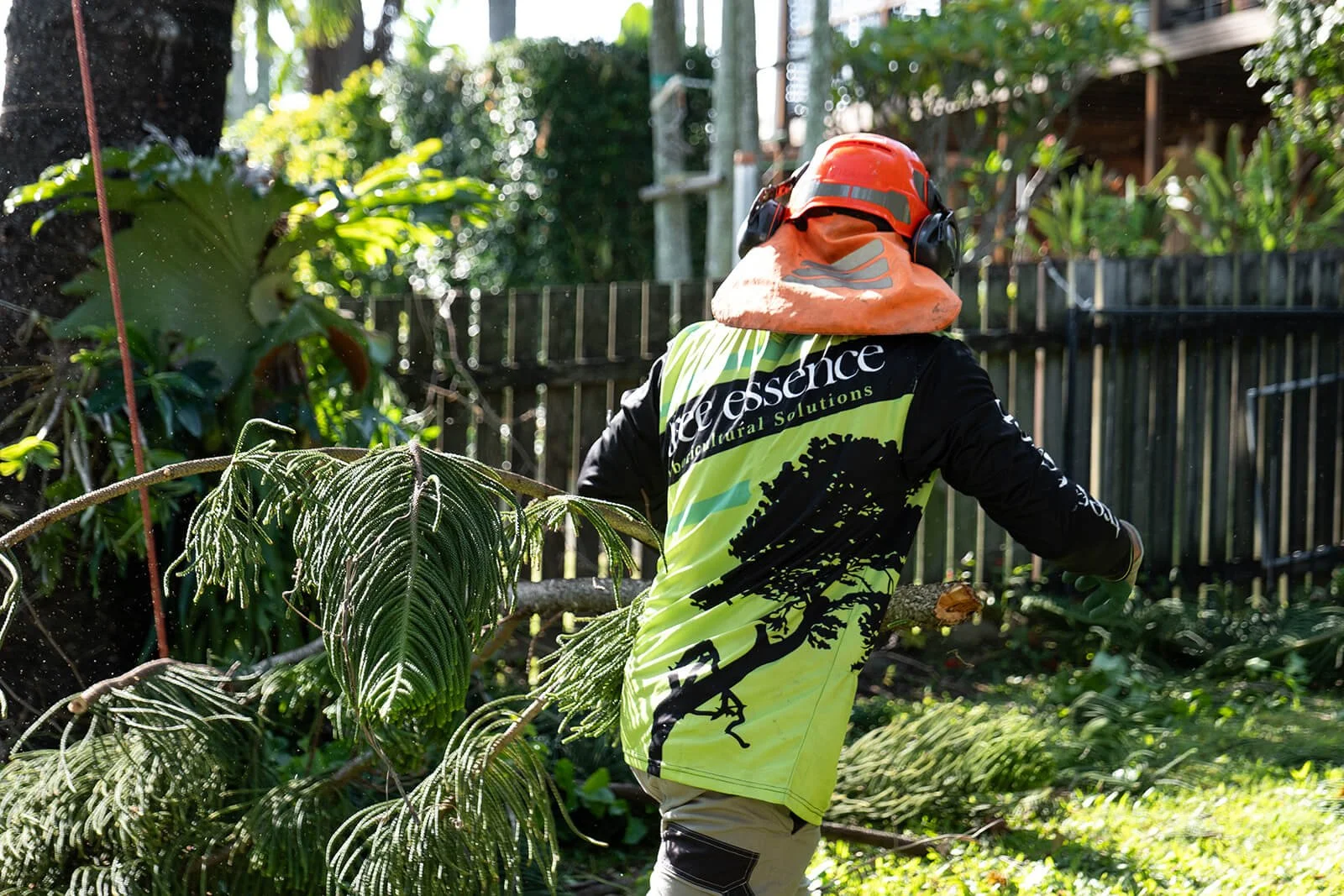
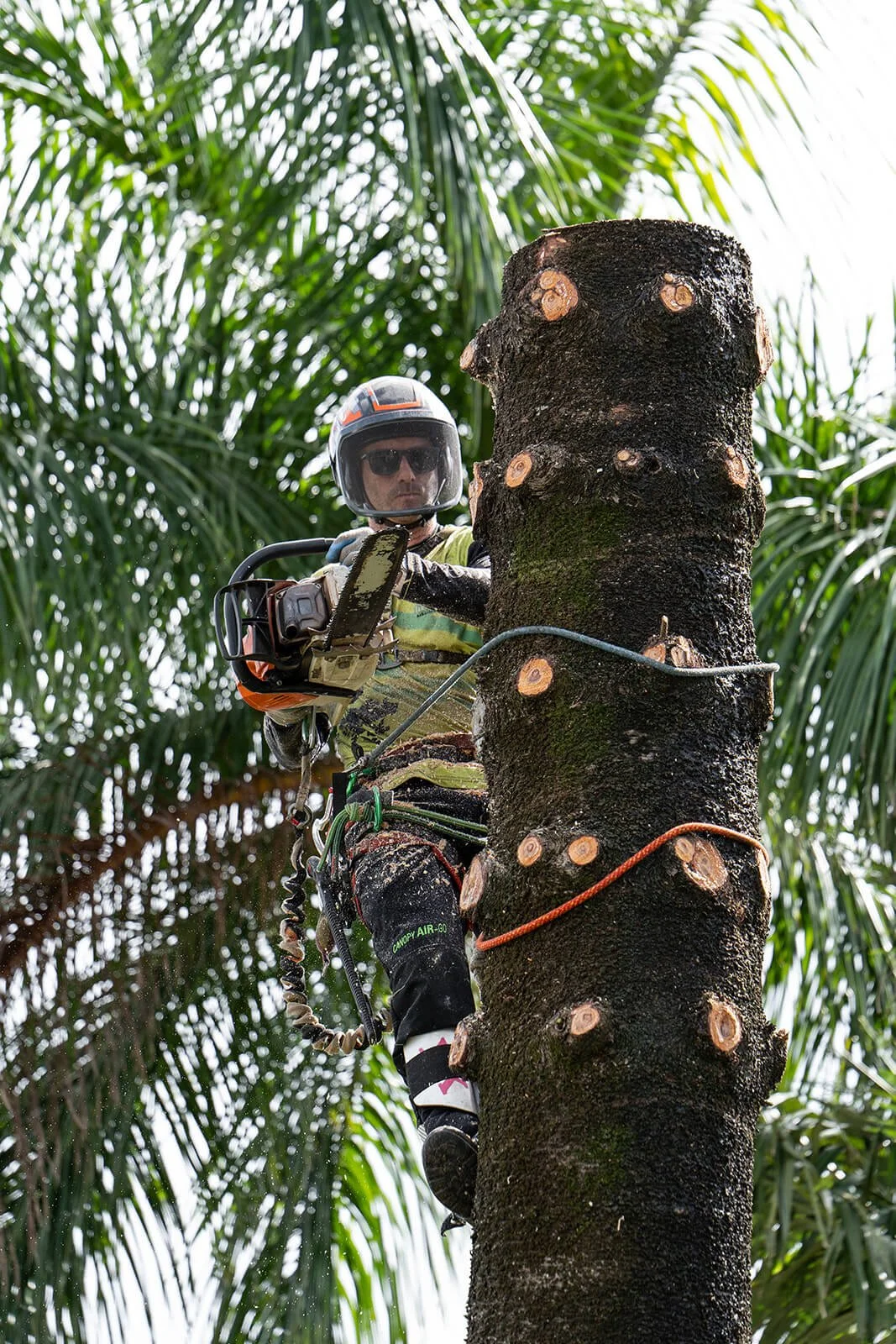
Worked progressively down the stem, each whorl cut at its point of attachment, rigged, and lowered to the ground crew. Laterals on the boundary side were given priority rigging control so nothing crossed the fence uncontrolled.
Lower crown and stem
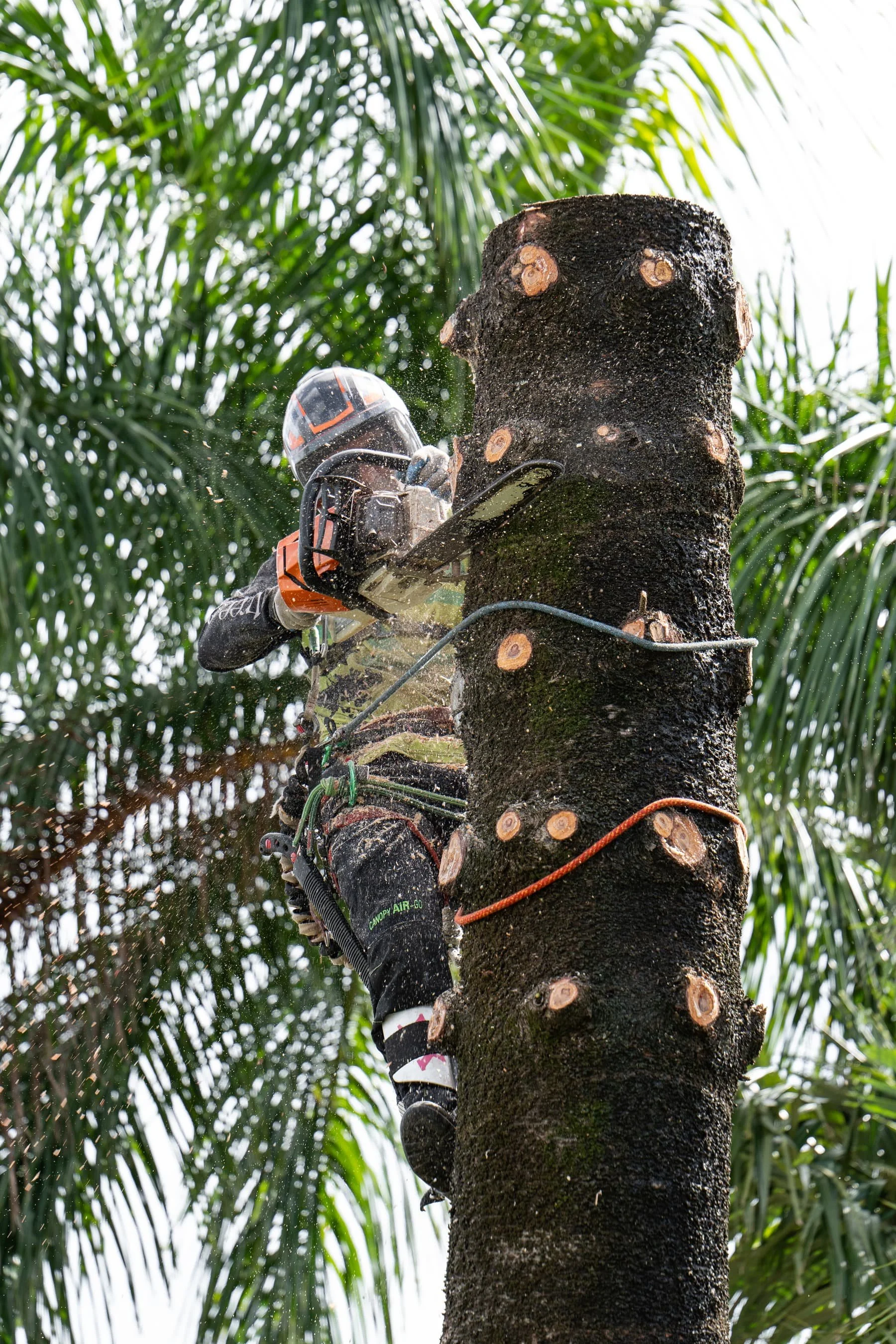
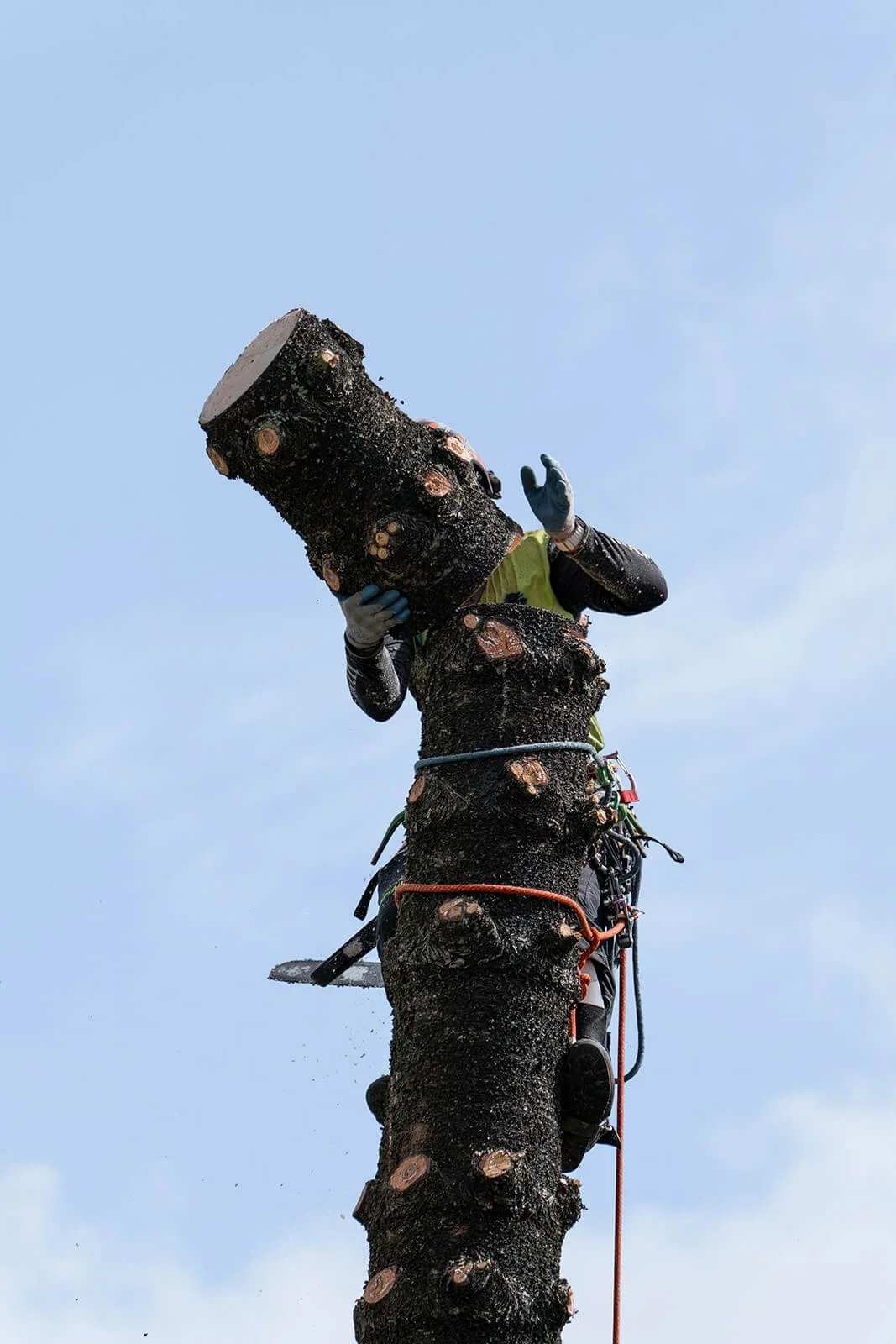
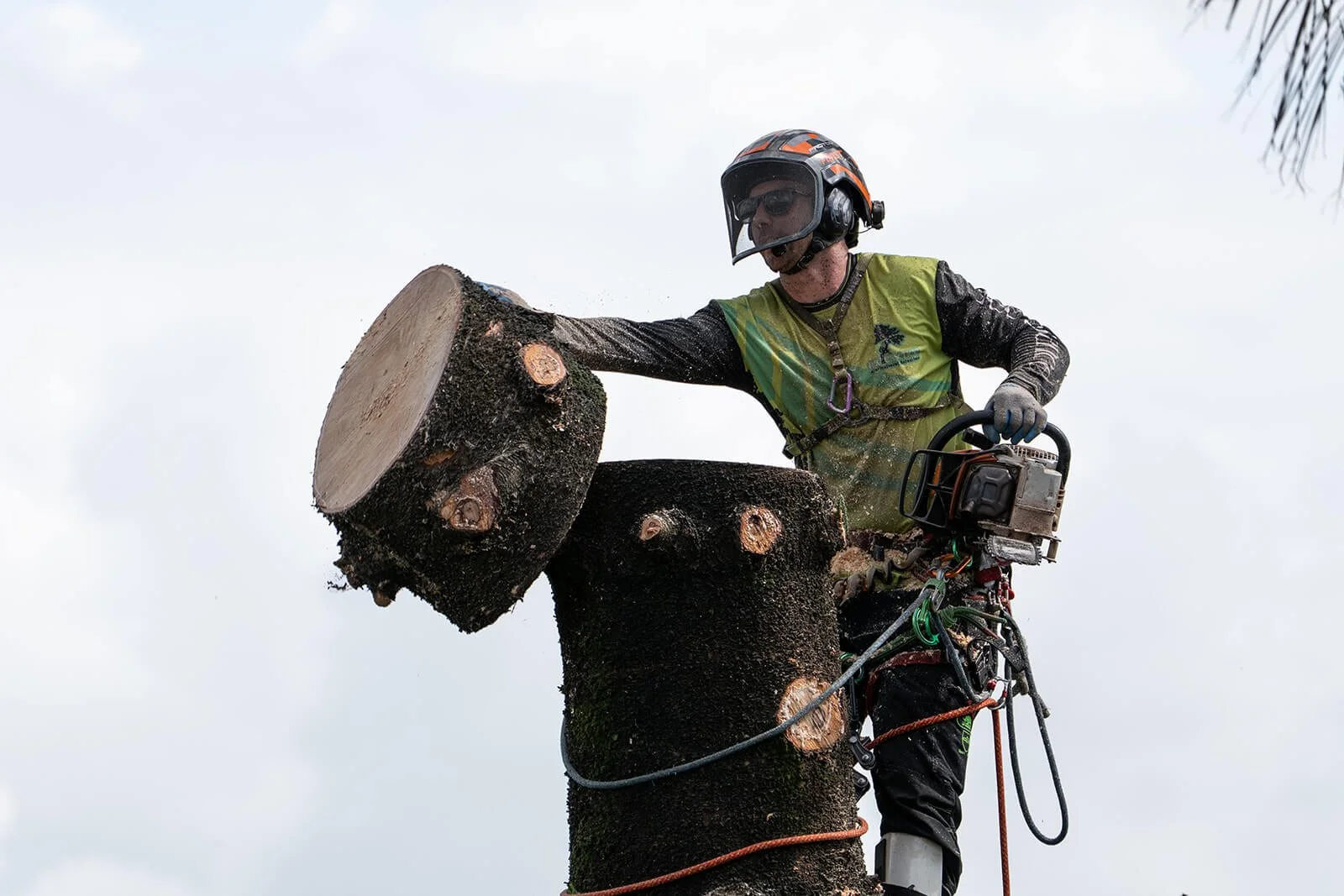
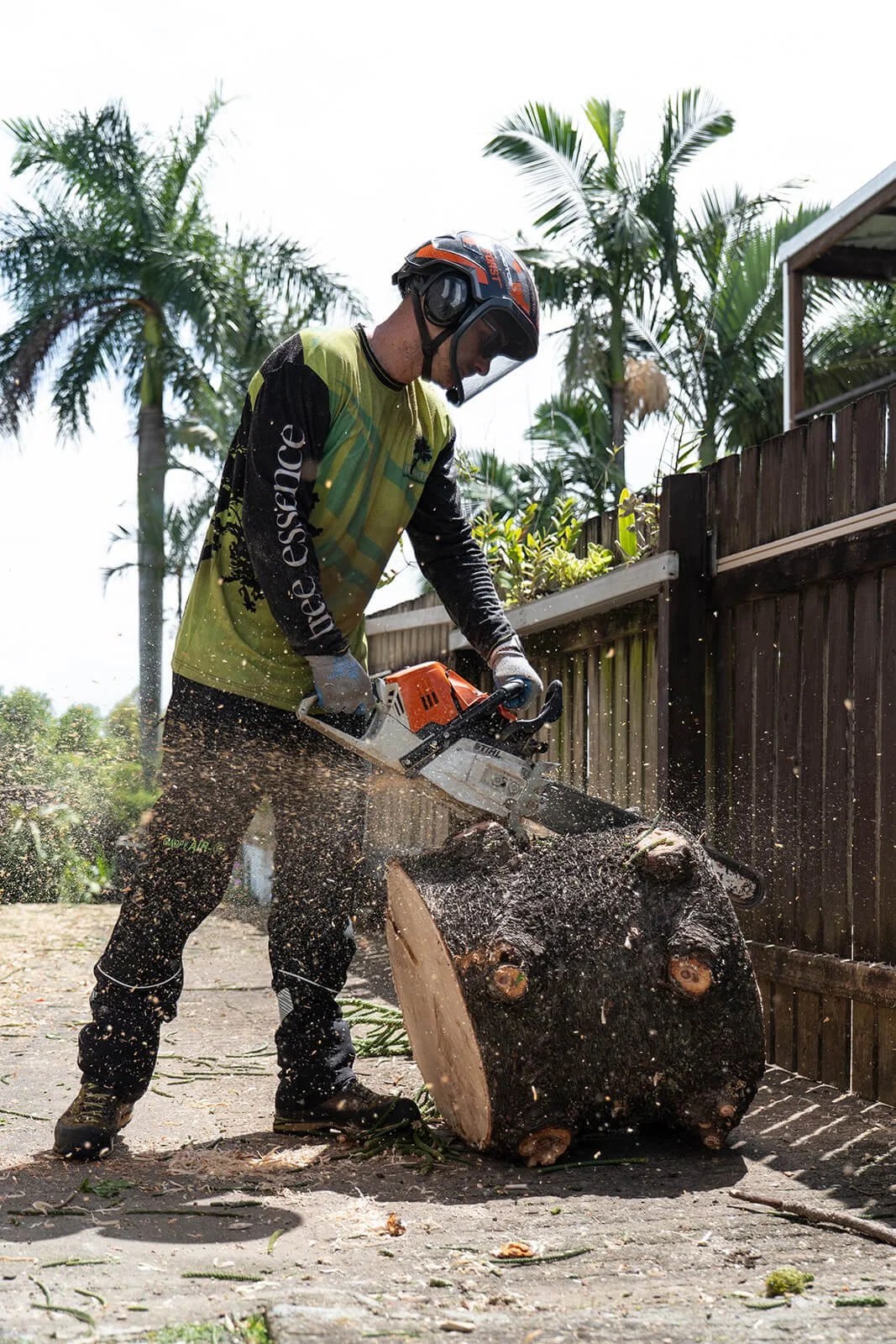
With the crown cleared, the stem itself was sectioned from the top down in lengths matched to the lowering system. Each section was cut, controlled on the line, and swung clear of the fence before coming down.
Stump and root collar
The final cut left a low stump, which was then ground below the surface to complete the removal and allow the ground to be reinstated.
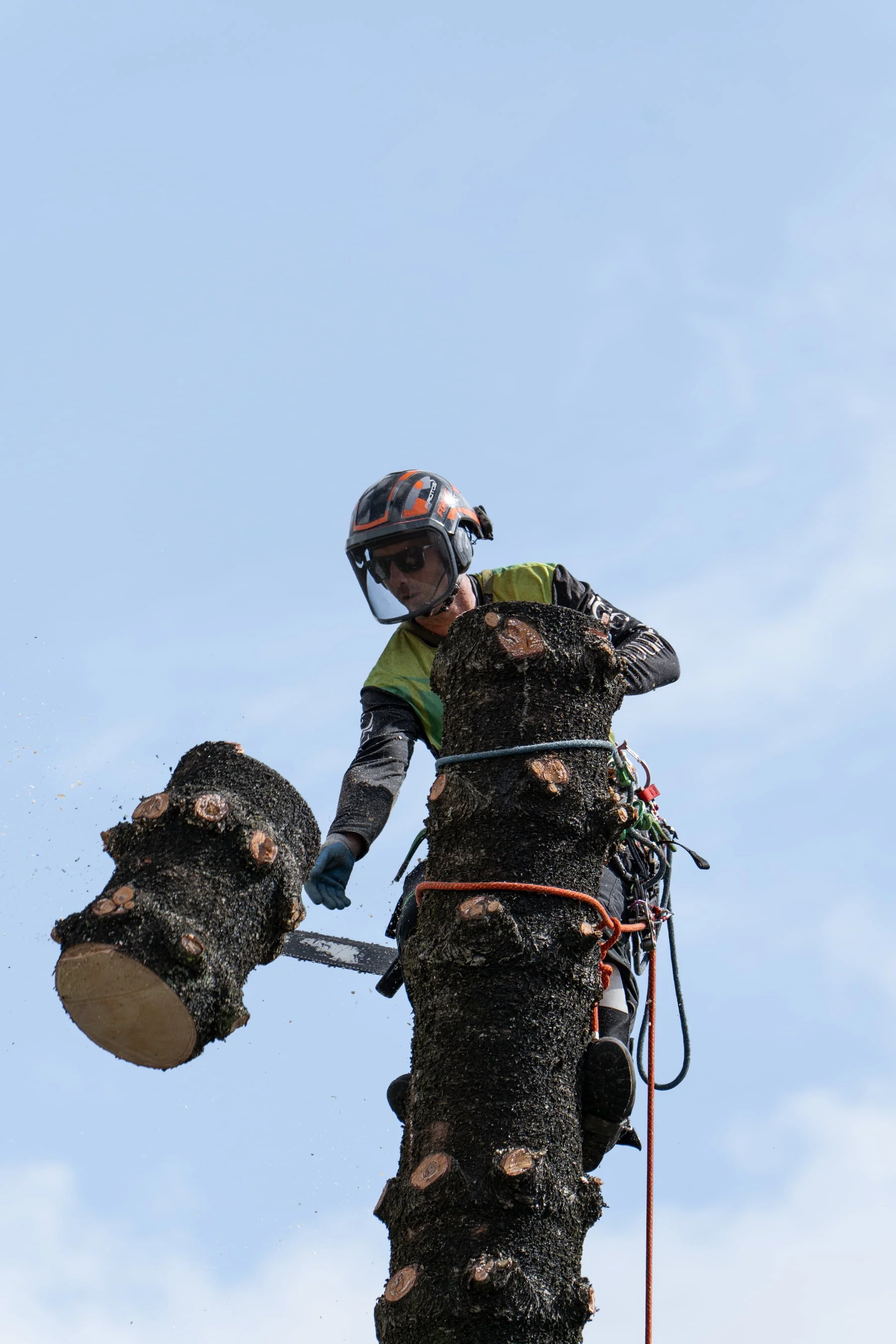
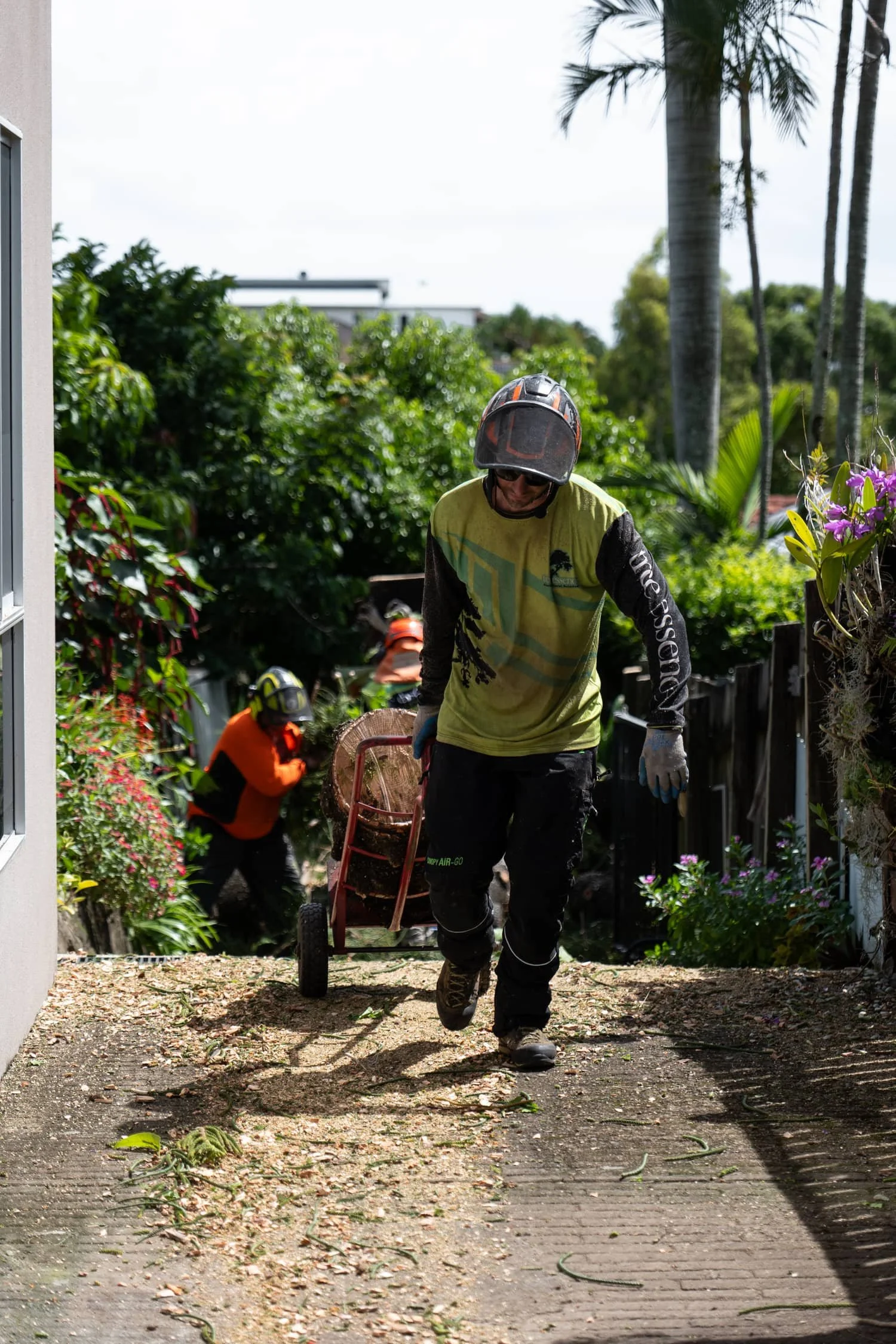
Controlling descent from that height takes rigging rated to the loads involved. The dynamic loads in a cut-and-lower can exceed the static weight of the piece being moved. We used a combination of redirect anchors, friction devices, and ground-based lowering systems to manage descent rates and protect the fence and the neighbour throughout. No section came down without a controlled lowering line in place.
Arborist note
Height is the defining challenge of a Norfolk Island Pine removal. Every section that comes down from 20 or 25 metres has to be controlled. You can't rely on a clear drop zone when you're working a boundary line. The rigging has to be right, the sequence has to be right, and the ground crew has to be ready at every cut. It's methodical, unhurried work. The job's done when everything's on the ground safely and the fence is still standing.
[ THE RESULT ]Outcomes
Risk eliminated at source
Complete removal has ended the branch-drop risk to the neighbour. No further incidents are possible from this tree.
Client liability resolved
With the tree gone, the client's exposure to ongoing damage claims and neighbourly disputes from branch shedding is extinguished.
Neighbouring property protected
The whole dismantle was carried out with no uncontrolled material entering the neighbour's property. The shared fence and all structures on both sides were undamaged.
Site cleared and reinstated
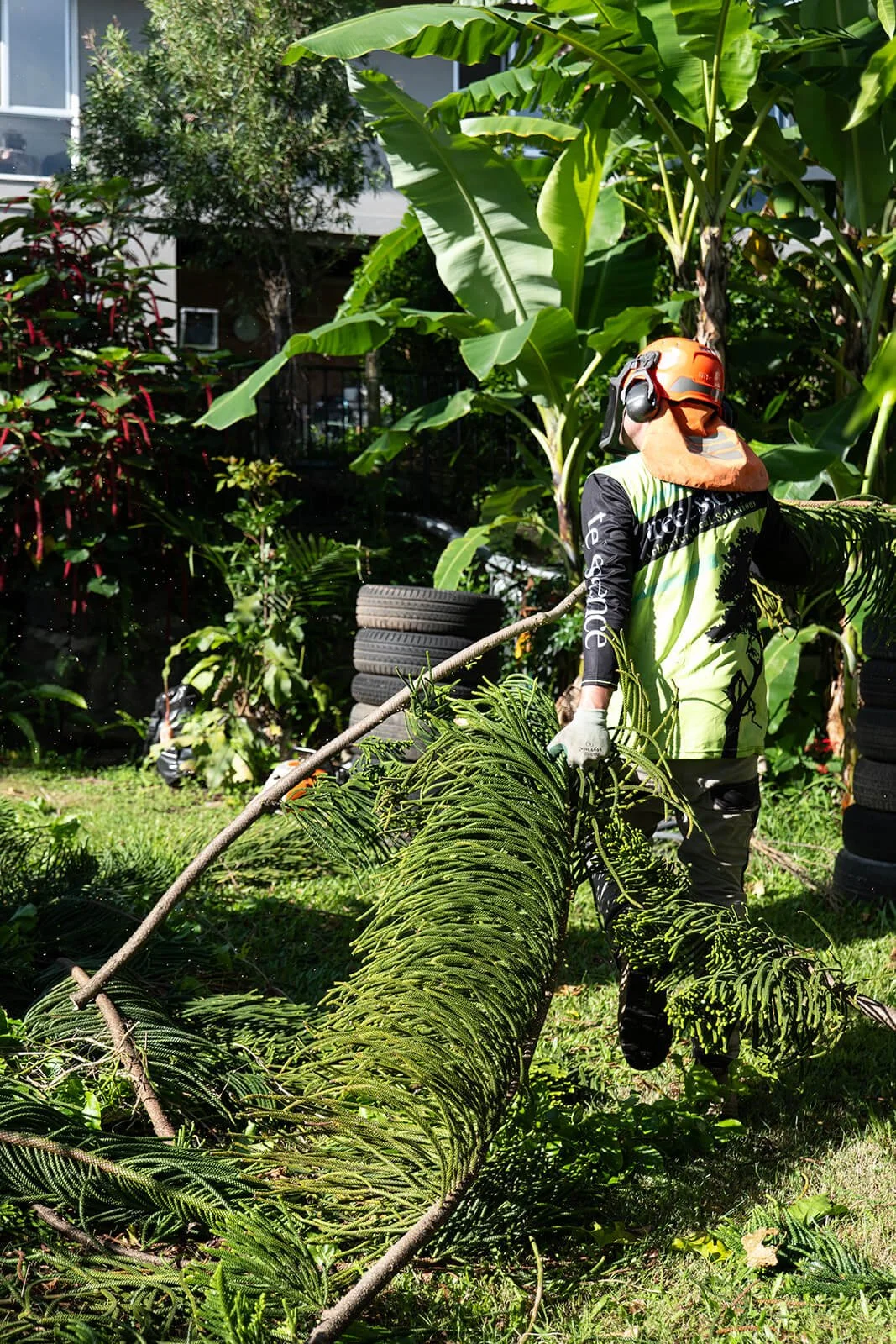
All timber and green waste was removed, the stump ground out, and the area left clear for the client to re-landscape.
In the client's words
Once the branches started coming down on the neighbour's side we knew it was only a matter of time before something serious happened. We didn't want to wait for it. Tree Essence came out, assessed the job, and took the whole thing down without a scratch on the fence or the neighbour's property. They kept us informed the whole way through and the site was spotless when they left. Exactly what we needed.
Disclaimer: This case study has been prepared by Tree Essence for general business development and information purposes. Client details are presented with consent. Works described were conducted by qualified personnel in accordance with applicable Australian Standards and industry best practice at the time of engagement. This document does not constitute a formal arborist report or tree management plan.
[ ABOUT ]Tree care grounded in knowledge.
Tree Essence is a family-run arborist business founded in 2013, backed by more than 20 years of hands-on experience. We're AQF Level 5 qualified arborists working across South East Queensland and the Northern Rivers, covering complete tree and palm care for residential, commercial, and rural properties, from consulting and structural pruning through to complex removals, stump grinding, soil amelioration, and specialist habitat creation.
Whatever the job, it comes back to the same thing: do it properly, leave the site clean, and deliver a result you don't have to second guess.
[ CONTACT ]